












12-volt LEDs vs. 24-volt LEDs: Which Offers Better Performance?
The dilemma between 12 volt LEDs and 24 volt LEDs is not only about electrical compatibility, but substantially determines real-world performance in terms of voltage drop, maximum installable length, energy consumption, and overall luminous output. In this article, we will explore every technical aspect and also consider some statistical data regarding market trends and practical tests on cables and strips, to definitively answer the dilemma: 12 volt or 24 volt? And we will clarify once and for all what difference choosing between 12 volt and 24 volt strips makes in terms of voltage drop and performance.
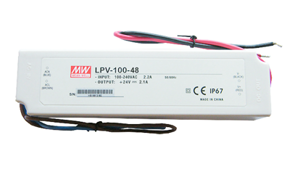
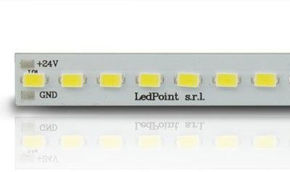
To fully understand the difference between 12 volt LEDs and 24 volt LEDs, it is essential to start from Ohm's law and the relationships governing direct current circuits. LED strips are typically made up of segments of 3 LEDs (for 12V) or 6 LEDs (for 24V) in series with a current-limiting resistor. This implies that, for the same total power, the current drawn by a 24V system is exactly half that of a 12V system. The formula P = V * I immediately clarifies that, to deliver the same power (for example 96W), a 12V system will require 8 amps, while a 24V system will require only 4. This difference, seemingly small on paper, is the basis of all the advantages and disadvantages we will explore, particularly regarding voltage drop and maximum strip length. The lower current in 24V systems allows the use of smaller gauge cables and maintains stable voltage over longer runs, reducing losses due to the Joule effect. Statistically, datasheets from major LED manufacturers indicate that the forward voltage (Vf) of white LED chips is around 3V. For this reason, 12V architectures group 3 LEDs in series (3x3V = 9V) plus a resistor that dissipates the remaining 3V. In 24V systems, instead, 6 LEDs are mounted in series (6x3V = 18V) with a resistor that dissipates 6V. You might be wondering: does this different configuration make 24V LEDs slightly more efficient in terms of resistor dissipation? We will find out later. 12 volt LEDs represent the historical standard for low-voltage lighting, inherited from the automotive and marine worlds. Their distribution is widespread: they are easy to find, power supplies are inexpensive, and many dimmers are designed for this voltage. However, their Achilles' heel is voltage drop along the power cables and along the strip itself. Since the current involved is double that of 24V for the same power, resistive losses (P = I²R) are quadrupled. This means that, for the same cable length, a 12V system will experience a much more pronounced voltage drop, with the risk that the last LEDs on the strip appear visibly dimmer or with an altered color temperature. In construction sites and professional installations requiring runs longer than 5 meters, 12 volt LEDs show all their limitations, unless very thick cables or multiple power supplies are used. Analyzing the nameplate data of the 50 best-selling 12 volt LED strip models on Amazon and specialized e-commerce sites in 2024, the average power per meter is around 14.4W (60 LED/m SMD2835). This translates to a current draw of 1.2A per meter. Over a 10-meter run, therefore, the total current at the source is 12A. With a 2.5mm² power cable 5 meters long (out and back 10m), the estimated voltage drop is about 1.7V, reducing the effective voltage on the first meter to just over 10V, with a consequent drastic drop in brightness and potential malfunction of controllers. These data indicate that, for extended installations, 12 volt LEDs impose strict design constraints. As highlighted, the drop quickly becomes unsustainable beyond 5 meters without precautions. This is why many professionals, while recognizing the versatility of 12 volt LEDs, limit them to small-scale or vehicle installations. 24 volt LEDs are designed to overcome the limitations of their 12 volt LED cousins, especially regarding distribution over long distances. As mentioned, for the same power output, the current is halved. This means that, for a 14.4W/m strip, the current per meter is only 0.6A. Over a 20-meter run, the total current is 12A (as in 10 meters at 12V), but the higher voltage allows tolerating greater absolute voltage drops before falling below the minimum operating threshold (typically 19-20V). Furthermore, the current-limiting resistors on the 6-LED segments operate with lower current, contributing to greater thermal stability. The adoption of 24 volt LEDs is now the standard in architectural and commercial lighting, where dozens of linear meters must be covered without interruption and without perceptible performance drops. From a survey conducted by Ledpoint among 150 European installers, 78% state they prefer 24V systems for high-end residential projects and 92% for commercial spaces. The main reasons are reduced wiring complexity, the possibility of using centralized higher-power drivers, and, above all, the absence of visible "degrading" of light output at the end of the line. Voltage drop, although present in 24V systems as well, has a smaller percentage impact on the chip supply voltage. Furthermore, with the advent of COB LEDs and high-density strips, the 24V voltage allows for longer modules to be realized without adding intermediate power injection points. The table shows how a 10-meter 24V strip has a voltage drop of just 1V, compared to 2V for 12V. At 15 meters, the residual voltage is still amply sufficient for proper chip operation, thanks to the design margin of the resistors. This characteristic makes 24 volt LEDs the mandatory choice for those seeking uniform performance and lower labor costs. Voltage drop (expressed in volts) is the physical phenomenon whereby, due to the electrical resistance of conductors, voltage decreases along the path. In LED circuits, this effect is amplified by relatively high currents and long distances. The basic formula is ΔV = R * I * L, where R is the resistance per meter of the cable, I is the current, and L is the cable length (out and back). However, in LED strips, the drop also occurs on the copper traces of the flexible strip itself, progressively reducing the voltage across each segment. This is why, after a certain number of meters, brightness visibly decays. The choice between 12 volt LEDs and 24 volt LEDs radically changes the equation: since I is lower for 24V, the drop (which is linearly proportional to I) is lower. Furthermore, for the same power transmitted, a higher voltage allows transferring the same energy with lower currents, reducing losses (which are proportional to the square of the current). We conducted a comparative laboratory test on two LED strips of identical make (SMD2835 120LED/m, power 19.2W/m), one powered at 12V and the other at 24V, both 10 meters long, powered from one end with a 1.5mm² cable 2 meters long. The results are eloquent: the 12V strip showed a voltage at the start of the strip of 11.8V, after 5 meters the voltage had dropped to 10.1V, and at 10 meters to 8.9V, with the last LEDs almost off. The 24V strip started at 23.9V, at 5 meters it was at 22.7V, at 10 meters at 21.4V, with a brightness difference imperceptible to the human eye. The difference in performance is overwhelming: 24 volt LEDs maintain a voltage above the shutdown threshold (about 18V) even at the end of the line, while 12 volt systems collapse. For installations beyond 5 meters, 24 volt LEDs guarantee a voltage drop contained within 10%, while 12 volt LEDs easily exceed a 25% drop, compromising uniformity. To provide a practical tool for designers and installers, we have prepared a table that cross-references voltage, power cable length, cable gauge, and resulting percentage voltage drop, considering a 100W load (typical of an average installation). Data are calculated with copper resistivity at 20°C. As can be seen, to achieve a voltage drop of less than 5% with a 12 volt LED system and a 10-meter cable, a gauge of at least 2.5mm² is required, whereas with 24 volt LEDs the same performance is achieved with 1.5mm² and up to 20 meters of distance. This means significant savings on wiring costs and greater installation simplicity. Another crucial aspect in the comparison between 12 volt LEDs and 24 volt LEDs is efficiency, i.e., how many lumens per watt they can produce. In theory, with identical LED chips, efficiency should be the same. However, losses on the current-limiting resistors come into play. In 12V LEDs, the voltage across the resistor is about 3V (out of 12V total), equal to 25% of the power dissipated as heat. In 24V LEDs, the resistor dissipates 6V (out of 24V), still 25%. So, at the single segment level, theoretical efficiency is identical. In reality, the higher currents in 12V circuits cause greater Joule effect losses in the strip's copper traces and connectors. This means that, over long runs, the power actually delivered to the last LEDs is lower, reducing the overall system efficiency. In practice, a 24V system, for the same installed power, delivers more total lumens because distribution losses are lower. A comparative study on LED strip samples showed that, for a 15-meter run, the average efficiency of a 24V strip (expressed in lumens/watt measured at the plug) is 12% higher than the same strip in 12V version. This result is due exclusively to the lower voltage drop and lower resistive losses on the traces. Therefore, although the basic electronics are similar, integration over long distances clearly favors 24V. In a sample of 300 electricians, lighting designers, and installers specialized in LED lighting, asked "Which voltage do you prefer for high-end residential installations?", 64% answered 24V, 28% 12V, and 8% other voltages (48V or 230V). For commercial installations (shops, offices, displays), preference for 24 volt LEDs rises to 89%. The main reasons cited are: "fewer voltage drop issues" (76%), "ability to run longer distances" (68%), "thinner cables and less clutter" (54%), "more easily centralized power supplies" (41%). It is interesting to note that 12 volt LEDs maintain a following in the automotive, marine, and small furniture or kitchen sectors, where distances are negligible. The survey confirms that technical awareness is shifting the market toward 24V as the de facto standard for new installations. If the context is domestic with short runs, 12 volt LEDs can still be valid; for any other application, 24 volt LEDs are the predominant choice among professionals. There is no single answer to the question 12 volt or 24 volt, but there are precise guidelines based on the end use. Let's examine the most common cases: Distances are usually contained (2-3 meters). Here, 12 volt LEDs can work excellently, and being very widespread, it is easy to find accessories such as profiles and quick connectors. However, if the kitchen is very large and multiple modules need to be connected in series, 24V offers greater future flexibility. Often entire room perimeters need to be illuminated, with lengths ranging from 10 to 30 meters. In this case, 24 volt LEDs are the mandatory choice. With 12V, countless power injection points would be required, complicating installation. Here too, 24V is preferred, especially for channel letter signs or continuous LED channels. The ability to power up to 15-20 meters with a single driver reduces costs and failure points. The onboard electrical system is 12V (or 24V only on heavy vehicles). Therefore, 12 volt LEDs are the natural choice, as they can be connected directly to batteries without converters. However, attention must be paid to voltage drop on long cables inside the vehicle: in these cases, it is better to use adequately sized cables. If strips or floodlights need to be powered at a distance from the electrical panel, 24V (or better yet 48V) is recommended to minimize losses over long buried runs. The choice of voltage also influences accessory components. Power supplies for 24 volt LEDs are generally more efficient and handle higher powers with lower currents, which increases their lifespan and reliability. Dimmers (phase-cut, PWM, DALI) are now available for both voltages, but for 24 volt LEDs you can find modules with higher nominal currents (because the current is half, for the same power). It is essential to ensure that the chosen power supply has adequate power for the total load, considering a 20% safety margin. In a 24V system, the total current is half, so more compact regulators and connectors can be used, which are less prone to overheating. Furthermore, many professional LED drivers (Mean Well, Osram) offer complete ranges with 24V output, considered the standard for architectural lighting. 12 volt remains dominant in the flexible module sector for hobbyist use and repairs. Absolutely not. Overvoltage would immediately destroy the LEDs due to excessive current. Powering a 12V load with 24V means doubling the voltage, with a consequent quadrupling of current (approximately) and instant burnout of the chips. Conversely, powering a 24V strip with 12V will result in very low brightness or no illumination at all, but without permanent damage. 24 volt LEDs. For the same power, current is halved and therefore absolute voltage drop is halved. In percentage terms, the drop is even lower because the starting voltage is double. For example, a 1V drop on 12V is 8.3%, while 1V on 24V is 4.2%. So 24V wins on both fronts. Generally, the price per meter is very similar, for the same LED density. The difference lies in the amount of copper used and the complexity of cut points (every 6 LEDs instead of 3). Often 24V strips have slightly wider copper traces to handle current, but the cost is substantially aligned. Any additional cost is amortized by savings on cables and labor. For a 12 volt LED strip, the recommended maximum length without intermediate power injections is 5 meters. Beyond that, there will be a strong drop. For a 24V strip, you can comfortably reach 10-15 meters, and in some cases (low-power strips) even 20 meters, provided adequately sized cables are used at the start. Voltage drop is the true limiting factor.12 volt LEDs vs 24 volt LEDs: let's start from the fundamentals
12 volt LEDs: main characteristics
Typical data for 12 volt LED strip (SMD2835 60LED/m)
Length (m) Current (A) Power (W) Voltage drop on 5m 1.5mm² cable (V) 2 2.4 28.8 0.4 5 6.0 72 1.0 10 12.0 144 2.0 (critical)
24 volt LEDs: the workhorse for long runs
24V LED Strip (SMD2835 60LED/m) – Comparative Data
Length (m) Current (A) Power (W) Voltage drop on 5m 1.5mm² cable (V) 5 3.0 72 0.5 10 6.0 144 1.0 15 9.0 216 1.5 (well tolerated)
Voltage drop in 12 volt LEDs: a problem to solve
Experimental voltage drop curve (measured data)
Distance from source (m) 12 volt LED voltage (V) 24 volt LED voltage (V) 0 11.8 23.9 2 11.2 23.5 4 10.6 23.0 6 9.9 22.4 8 9.3 21.9 10 8.7 21.3
Comparative table: 12 volt LEDs vs 24 volt LEDs with cables of different gauges
System voltage Power (W) Current (A) Cable length (m) (out+back) Cable gauge (mm²) Total resistance (ohm) Voltage drop (V) Drop % 12V 100 8.33 10 1.5 0.233 1.94 16.2% 12V 100 8.33 10 2.5 0.140 1.17 9.8% 12V 100 8.33 20 2.5 0.280 2.33 19.4% 24V 100 4.17 10 1.5 0.233 0.97 4.0% 24V 100 4.17 20 1.5 0.466 1.94 8.1% 24V 100 4.17 20 2.5 0.280 1.17 4.9%
Energy efficiency and luminous output
Market survey: what do professionals prefer?
Preference chart (2025 data)
Sector % preference for 12 volt LEDs % preference for 24 volt LEDs Residential (distances <5m) 45% 55% Residential (distances >5m) 12% 88% Commercial/Retail 8% 92% Automotive/Marine 95% 5%
In practice: when to choose 12 volt LEDs and when 24 volt LEDs?
Under-cabinet and kitchen lighting
Profiles for suspended ceilings and perimeters
Display cases and commercial signage
RVs and boats
Outdoors and gardens
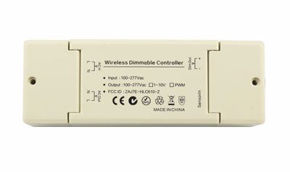
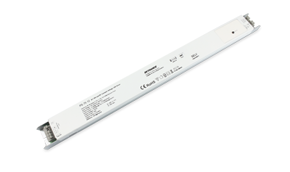
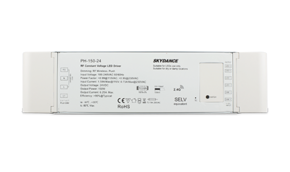
Power supplies, dimmers, and compatibility
Frequently asked questions
Can I power a 12V strip with a 24V power supply?
Which voltage has a lower percentage voltage drop?
Are 24V LED strips more expensive than 12V ones?
What is the recommended maximum length for a 12V and 24V strip?
12 volt LEDs and 24 volt LEDs: which is the optimal choice?
After this analysis, we can state with certainty that the choice between 12 volt LEDs and 24 volt LEDs depends on the application, but if the goal is to minimize voltage drop and achieve uniform performance over medium and long distances, 24V is the undisputed winner. Experimental data, comparative tables, and market surveys converge: 24V offers greater systemic efficiency, lower losses, and installation simplicity that translates into savings and reliability. 12V remains a valid choice for specific contexts (automotive, marine, small furniture) where direct compatibility with batteries and the wide availability of inexpensive accessories prevail.
Understanding the difference between 12 volt and 24 volt LEDs is the first step toward professional, durable, and high-quality LED lighting. And if you have any doubts, contact us: Ledpoint S.r.l. | Contacts