








English electrical system regulations and LED strips
We are receiving more and more questions about how to correctly install various types of LED strips safely and in compliance with regulations. For this reason, we decided to write a clear and in-depth guide, considering that the reference standards are constantly being updated. We will discuss the fundamental principles of European and British standards, what changes between different voltage levels, what BS 7671 stipulates for LED strips, and how our products integrate perfectly into a compliant installation.
The regulatory framework: Europe and the United Kingdom
Let's take a step back. Across Europe, the design and execution of electrical installations are based on a series of standards harmonised by CENELEC (European Committee for Electrotechnical Standardization). These standards (the HD 60364 series) establish common safety requirements. Each member country adopts them at a national level.
BS 7671: the "UK standard" for electrical installations
In the United Kingdom, the harmonised standards are adopted as BS 7671 - IET Wiring Regulations. This is the primary standard for low-voltage electrical installations (up to 1000V AC or 1500V DC). BS 7671 is not a law in itself, but it is recognised as the "standard of good practice" and compliance with it is required to meet the Building Regulations 2010 (Part P - Electrical safety) in England and Wales, and similar regulations in Scotland and Northern Ireland. Following BS 7671 is the most direct way to demonstrate that an installation has been carried out to a good standard and is therefore legally compliant.
When asking "what should an electrical installation be like to be compliant?" the correct answer in the UK is: "compliant with BS 7671".
Safety extra low voltage systems: SELV and PELV
In the case of LED strips, BS 7671 is fundamental because it defines and regulates extra-low voltage circuits. Part 2 and Chapter 41 of the standard deal with protection against direct and indirect contact, distinguishing between dangerous voltages (230V) and safe voltages. A 12V or 24V strip falls under the SELV (Safety Extra Low Voltage) category if it is powered by a transformer that guarantees safe separation between the primary (230V) and secondary (12/24V) circuits.
This means that in case of accidental contact with the low-voltage parts, there is no risk of electric shock because the voltage is too low to generate a dangerous current. A 230V strip, on the other hand, is considered dangerous voltage and requires all the protective measures provided for a standard installation (insulation, enclosures, earthing if Class I).
Installation competence: certification schemes
In the UK, who can install an electrical system? The answer is clear: for work involving the 230V circuit (such as adding a new light point or a wired power supply), the intervention of a qualified and competent electrician is mandatory. Ideally, a professional registered with a competent person scheme such as NICEIC, NAPIT, or ELECSA. These professionals can self-certify their work and notify the Local Authority Building Control if necessary.
Regarding the extra-low voltage part (SELV), such as connecting a 12/24V strip to its driver, it can also be carried out by a competent DIY enthusiast, provided the 230V part (socket, plug, fixed wiring of the driver) is already existing, safe, and accessible. If a new fixed driver needs to be wired into the circuit, the intervention of a professional is mandatory.
LED strips: 230V vs low voltage (SELV) according to regulations
Let's get to the heart of the matter. The question we get most often: "Can I use 230V strips in the bedroom?". Let's analyse the two scenarios in light of BS 7671.
230V LED strips indoors: is it possible?
As mentioned, it is not absolutely forbidden, but it is technically complex and not recommended. Standard 230V strips (those without a sheath, with cut points every meter) are generally Class I (require earthing) or Class II (double insulated). The main problem is that a bare flexible strip cannot guarantee the safety requirements demanded by BS 7671:
- protection against direct contact: The standard requires that live parts at dangerous voltages be inaccessible. A bare strip has exposed contacts and does not achieve an IP2X degree of protection (protection against fingers).
- earthing: If the strip is Class I, it must be earthed, which is almost impossible to achieve effectively on a flexible support.
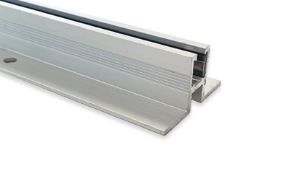
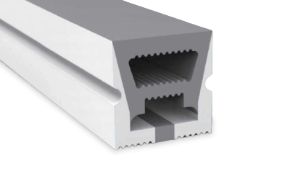
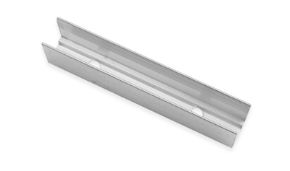
The only way to make a 230V strip compliant indoors is to install it inside an aluminium profile with an opal or satin diffuser that, once mounted, makes the live parts inaccessible without the use of tools. The profile must be designed for this purpose, and the overall installation must be considered a fixed part of the electrical system. Many Ledpoint profiles, with their diffusers, can fulfil this function, but we recommend them mainly for outdoor use or commercial applications with already protected 230V strips (e.g., IP67), where the risk of accidental contact is lower.
Low voltage strips (12V, 24V, 48V)
12V or 24V (and also 48V) strips operating at Safety Extra Low Voltage (SELV) are the ideal and inherently compliant choice for domestic and commercial environments. The regulations (BS 7671, Chapter 41) consider them non-hazardous regarding electric shock. They can be installed almost anywhere: under cabinets, in skirting boards, in false ceilings, on stairs, even in bathrooms (provided the driver is outside the wet zones or has an adequate IP rating).
Comparison table: 230V vs 12/24V according to BS 7671
There is no absolute ban on 230V strips indoors, but the conditions for installing them safely are so stringent (earthing, IP2X protection) that in domestic practice they become nearly impracticable. For this reason, regulations and good practice strongly favour the use of Safety Extra Low Voltage (SELV) in domestic environments.
Comparison table: high voltage / low voltage LED strips
| Characteristic | 230V LED strip | 12/24V LED strip (SELV) |
|---|---|---|
| Electrical Safety | Low (dangerous voltage, shock risk) | High (no danger upon contact) |
| Compliance with BS 7671 | Difficult: requires Class II insulation/enclosure or earthing and IP2X protection | Easy: falls under SELV circuits, few restrictions |
| Direct Contact Protection | Mandatory (profile with diffuser not removable without tools) | Not required for electrical safety (but recommended for dust and impact) |
| Earthing | Required for Class I appliances (often impossible) | Not required |
| Bathroom Installation (zones 1,2) | Prohibited or severely limited | Possible with driver outside zones and suitable cables |
| Voltage Drop | Low (ideal for long runs) | Requires adequately sized cables for runs >5m to avoid light drop-off |
| Typical Applications | Outdoors (IP67), signage, industrial, commercial | Indoors, furniture, design, under-cabinet, accent lighting |
Regulations for outdoors and damp locations
For outdoors, the use of 230V is more common and accepted, but only if the strip has a high ingress protection rating (IP65, IP67, IP68). In this case, the strip is enclosed in a sheath that makes it watertight and protects against accidental contact. It can be installed under gutters, in gardens, on facades. Even in this case, distances and connection methods to the junction box, which must be IP65, must be respected. The same applies to the profiles housing the LED strip: they must be suitable for outdoor installation and, if necessary, guarantee mechanical protection.
Your frequently asked questions on regulations
Selling a property does not strictly require an Electrical Installation Condition Report (EICR), but it is an increasingly common practice and often requested by buyers. An EICR is a thorough inspection that reveals the condition of the installation. If the EICR highlights serious defects (code C1 or C2), the buyer may request remediation before the sale completes. In the event of an accident after the sale, a non-compliant installation can lead to serious legal and insurance consequences for the seller.
A qualified and competent electrician, ideally registered with a Competent Person Scheme such as NICEIC, NAPIT, or ELECSA, issues the certification (EIC - Electrical Installation Certificate) for new installations or EICRs for checks on existing ones. For notifiable work, the professional will also handle informing the Local Authority Building Control.
You risk fines during inspections, insurance problems in case of fire (the insurer may refuse to pay compensation if the fire was caused by a non-compliant installation), and most importantly, you jeopardise people's safety. An improperly installed 230V strip can cause shocks or fires.
There are signs indicating a non-compliant installation: shocks when touching metal parts of appliances, circuit breakers (MCB/RCD) tripping frequently, hot cables, absence of an RCD protecting circuits, use of 230V strips without a protective profile. BS 7671 requires circuits to be adequately protected by residual current devices (RCDs) and miniature circuit breakers (MCBs). If in doubt, it's advisable to have an EICR carried out by a professional.
The building regulations 2010 (Part P) and its impact
When discussing installation safety, a key reference in the UK is Part P of the Building Regulations. This law, applicable in England and Wales, states that all electrical work in dwellings must be designed and installed to ensure the safety of persons.
What exactly does Part P say?
Part P establishes a simple but far-reaching principle: electrical work must be carried out to a satisfactory standard. And how is this "satisfactory standard" defined? Precisely through compliance with BS 7671. This means that if you follow BS 7671, you are automatically compliant with the Building Regulations. If you don't, in the event of an accident or an inspection, you would have to demonstrate that the installation is nevertheless safe, a nearly impossible task.
How does this relate to LED strips?
Let's take the classic case: a customer buys a 230V LED strip and decides to install it themselves under the kitchen cabinet, without any profile or mechanical protection. This installation clearly violates the principles of BS 7671 (protection against direct contact, insulation). Consequently, it also violates Part P of the Building Regulations, which requires all work to be done to a satisfactory standard. In case of fire or electrocution, the legal and insurance consequences for the person who carried out the installation would be very serious.
The requirement for notification
A crucial aspect of Part P is the notification of work to the Local Authority Building Control. Generally, work involving the installation of new circuits, replacing a consumer unit, or work in special locations like bathrooms and gardens, must be notified. An electrician registered with a competent person scheme can self-certify the work and handle the notification, relieving the homeowner of this burden. Adding an LED strip by plugging it into an existing circuit does not require notification, but adding a new fixed wired point does.
Why do many ignore these rules?
Because inspections are not frequent, but the regulations exist and are applied when problems arise. The real risks are:
- domestic fire: if the insurance company discovers the fire started from a 230V LED strip installed without respecting regulations, it may refuse to pay for the damages. This is happening more and more often;
- personal injury: if someone is electrocuted, criminal proceedings for negligence may follow. And in that case, the question "was the installation compliant?" becomes central;
- selling or renting the property: an EICR with serious defects can block a sale or require costly remedial work.
How to design a compliant LED strip installation
We have prepared a short guide to help you navigate the correct steps for a compliant installation.
- Choose the right voltage: indoors, favour 24V or 12V (SELV). Outdoors, consider 230V IP67 or 24V with an IP67 driver.
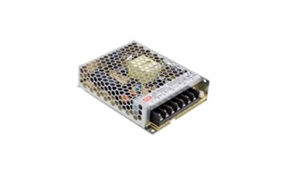
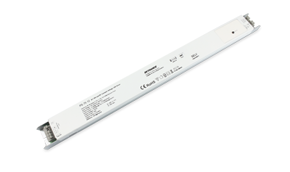
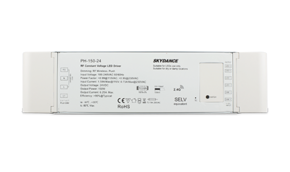
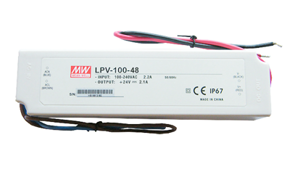
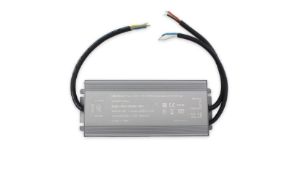
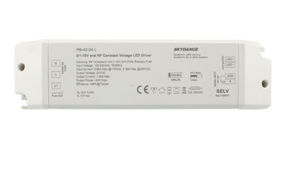
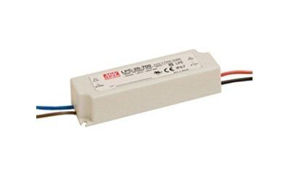
- Separate and safe driver: the 230V-24V driver must be of the SELV type (safety separation), with certification marks (CE, UKCA, possibly ENEC or Kitemark). Position it in accessible but not visually obtrusive locations, respecting ventilation and the manufacturer's instructions.
- Mechanical protection: even for low voltages, a profile protects the strip from dust, impact, and improves light output. For 230V indoors, a profile with a diffuser is mandatory and must be fixed so that the strip is not accessible without tools.
- Cable sizing: with 24V, on long runs (over 5 metres), it's advisable to use adequately sized cables (1.5mm² or 2.5mm²) to avoid voltage drop and overheating.
- Residual Current Devices (RCDs): the 230V supply circuit feeding the transformer must be protected by a 30mA RCD, as required by BS 7671 for most domestic circuits.
- Document everything: keep the product instructions, component brands, and if the installation was done by a professional, keep the certificate (EIC) or the condition report (EICR).
The hidden pitfalls of regulations: voltage drop and thermal management
There is an aspect of the regulations that is often underestimated: thermal management and voltage drop. They may seem like technical details, but they are the main cause of malfunctions and, in worst cases, fire hazards. BS 7671 (Chapters 42 and 52) is clear: the installation must be designed so that no component exceeds the maximum permissible temperatures.
Heat: the number one enemy of LED strips
An LED strip, especially high-density or high-power ones, generates heat. BS 7671 requires that installed materials respect their operating temperatures. A strip operating at 70°C is not a problem if it is certified to do so. But if that same strip is installed in a poor-quality plastic profile or coiled up on itself, the temperature skyrockets. The result? LED degradation, melting of cable insulation, and fire risk.
What exactly does the standard say?
BS 7671, in section 522, deals with external influences, including temperature. You must ensure that the LED strip does not reach temperatures that could damage itself or its surroundings. Installing a strip in an aluminium profile helps dissipate heat. Installing it on a wooden surface or in a closed plastic trunking creates heat buildup, violating the spirit of the standard.
Voltage drop: the problem no one considers
The longer the strip, the more the voltage drops (especially with 12V and 24V). This causes non-uniform light and overheating of the copper traces. BS 7671 (Appendix 12) provides guidelines on the maximum permissible voltage drop (generally 3-5% for lighting circuits). If you have a long strip, you need to use adequately sized cables, power the strip at multiple points, or switch to 48V.
Ledpoint profiles are designed with fins that help dissipate heat. For long distances, we offer 48V strips or solutions with redundant wiring. For more details, read our article on sizing the power supply.
The most common mistake: coiled or carelessly hidden strips
Leaving an excess coil of strip hidden behind furniture is dangerous. That glowing coil becomes a thermal bomb. Regulations strictly forbid installing components in a way that traps heat. Strips must always be laid flat and, if possible, fixed to heat-dissipating surfaces.
Sizing the power supply / Driver
Good practice (and the standard of workmanship) dictates not running the driver at 100% capacity. We recommend sizing it with a 20-30% margin above the total wattage of the strips. This ensures the installation remains stable and safe, aligning with the philosophy of the standard: the installation must function correctly under all foreseeable conditions.
Longevity and ongoing compliance
An installation can be compliant on the day it's installed, but after a year of overheating, cables can deteriorate. Regulations implicitly require that the installation maintains its safety characteristics over time. Using quality components is an investment in lasting safety.
How should electrical installations incorporating LED strips be constructed?
The construction of an installation with LED strips is no different from that of any fixed installation. BS 7671 has precise requirements on how they must be executed.
Circuit division and protection
The standard requires installations to be divided into circuits. It is good practice to separate lighting circuits from socket outlet circuits. Each circuit supplying LED strips must be protected by a correctly sized MCB and a 30mA RCD, as required by BS 7671 for protection of persons.
The consumer unit
If adding strips, you need to check that the consumer unit has space for new MCBs and that the total load is adequate. For LED strips, 6A MCBs are often used.
Junction boxes and accessibility
Connections must be made in accessible and inspectable junction boxes. If a driver is placed in a false ceiling, an access point (inspection hatch) must be provided. We recommend using quick connectors and placing them in accessible locations.
Mechanical fixing
An LED strip cannot just be stuck on with poor-quality double-sided tape. It must be fixed using appropriate profiles or clips that guarantee secure retention over time. LightingLine profiles provide secure mechanical retention and aid thermal dissipation.
Cables: size and insulation
Cables must be suitable for the voltage and temperature. For 24V strips, the cross-sectional area must be adequate to prevent voltage drop. 230V cables must be mechanically protected (e.g., within conduit) if running in walls.
Drivers: never hermetically sealed
Drivers produce heat. If enclosed in a space without ventilation, they go into thermal protection and get damaged. The standard requires components to be installed in a way that prevents exceeding maximum temperatures.
Certification and notification
For new installations or major modifications, an Electrical Installation Certificate (EIC) issued by a professional is required. For minor works, if carried out by a competent electrician, a Minor Electrical Installation Works Certificate (MEIWC) will be issued. If you add a strip to an existing installation without modifying the fixed wiring, a new certificate is not needed, but the work must still comply with BS 7671. If you open the consumer unit or modify a circuit, professional intervention is mandatory.
Inspectability and maintenance
The installation must be designed to be inspected and maintained. Every important component must be reachable. Ledpoint profiles, with their openable diffusers, help respect this principle.
The same care as a traditional light point
An LED strip is not an accessory; it is a component of the electrical installation and deserves the same attention and care as a traditional light point. Its versatility does not reduce the risks if installed improperly.
Regulations: here's why we don't recommend 230V indoors
Ledpoint selects products taking the full regulatory framework into account. A 24V strip is intrinsically safer and more easily compliant with the standard of good practice. A 230V strip is only offered for outdoors or specific applications, always indicating the need for profiles and qualified personnel.
Our advice is always the same: for indoors, use low-voltage 24V strips; for outdoors, assess the context and use 230V only with certified IP67 products and professional installations.
It is essential to follow the guidelines of BS 7671 and the Building Regulations (Part P), and not to improvise.
Safety is not an optional extra.