








Horticulture and growing: the future of cultivation
Horticulture is undergoing a radical transformation, driven by technological innovations that promise to revolutionize the way we grow food and plants. In this landscape, LED grow lighting emerges not as a simple alternative, but as the cornerstone of more sustainable, efficient, and controlled agriculture.
This article delves deep into how specialized LED strips, intelligent controllers, and cutting-edge profiles are redrawing the boundaries of cultivation in both indoor and greenhouse environments, providing scientific data, comparative analyses, and a practical guide to optimizing every growth stage.
Horticulture: from tradition to LED technology
Horticulture, understood as the science and art of cultivating vegetables, flowers, and plants, has spanned millennia of development. Today, it faces unprecedented challenges: population growth, climate change, reduction of fertile land, and the need for sustainability. The answer to these challenges lies in the ability to control and optimize every environmental parameter, first and foremost, light. LED lighting for growing is no longer a niche experiment, but the enabling technology for a new cultivation paradigm, known as Controlled Environment Agriculture (CEA). This shift represents a quantum leap, comparable to the introduction of greenhouses in the 19th century, but with infinitely greater precision potential. To fully understand the LED revolution in horticulture, it is essential to start with photobiology. Plants do not "see" light like humans; they perceive it through specialized photoreceptors (phytochromes, cryptochromes, phototropins) that respond to specific wavelengths of the electromagnetic spectrum. Each pigment absorbs light energy in specific bands, triggering distinct physiological responses: from germination to flowering, from antioxidant synthesis to growth direction. Sunlight, although complete, is variable and often inefficient for modern production needs. An artificial light source, on the contrary, can be engineered to deliver exactly the ideal spectrum, intensity, and photoperiod for each species and developmental stage. The Photosynthetically Active Radiation (PAR) defines the range of wavelengths (from 400 to 700 nm) that plants can use for photosynthesis. However, the concept of PAR as the sole metric is now outdated. The most advanced research focuses on the quantum photosynthetic efficiency (Quantum Yield) for individual wavelengths. Studies, such as those conducted by Dr. Bruce Bugbee of Utah State University, show that leaves use photons in the red (660 nm) with over 90% efficiency, while those in the blue (450 nm) are around 85%. High-end LED strips, such as Ledpoint's Full Spectrum and Horticulture series, are designed by maximizing these parameters, balancing photon flux at the absorption peaks of chlorophyll A, chlorophyll B, and carotenoids. Plants also use light as a signal to regulate development and morphology (photomorphogenesis). This is the field where fine modulation of the LED spectrum shows its maximum potential. Blue light (430-460 nm) promotes compact habitus, leaf thickening, and stomatal opening, essential for robust vegetative growth. Red light (660 nm) stimulates stem elongation, leaf expansion and, in synergy with far-red (730 nm), regulates photoperiodism and flowering through the phytochrome system. The addition of green light (500-600 nm), once considered useless, has proven crucial for penetrating the lower leaf canopy, increasing the overall efficiency of the crop. Dimmable and programmable LED strips allow "orchestrating" these effects in real-time, a possibility non-existent with HPS or MH technologies. Horticulture, light, and plant photobiology
Photosynthesis and PAR: the starting point
Beyond photosynthesis: photomorphogenesis and action spectrum
Designing an LED system for horticulture: from spectrum to controllers
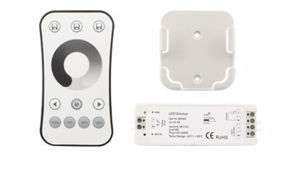
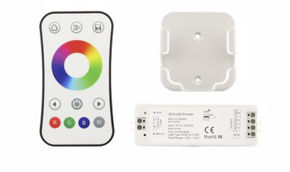
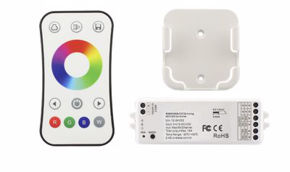
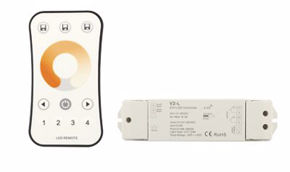
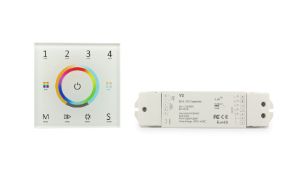
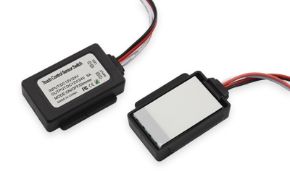
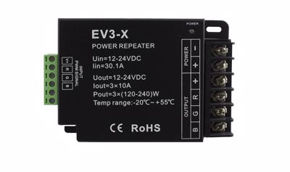
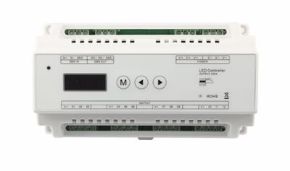
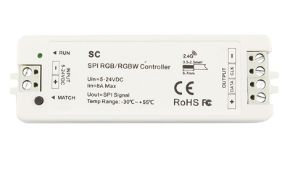
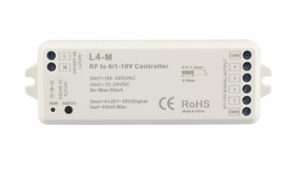
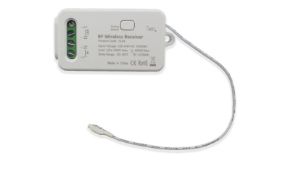
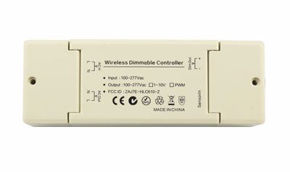
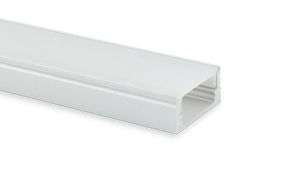
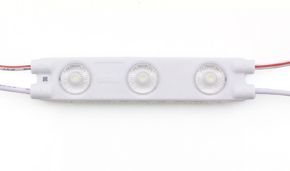
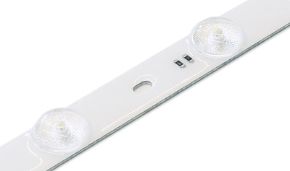
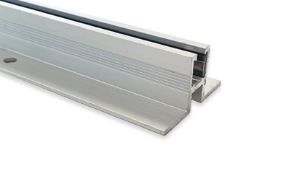
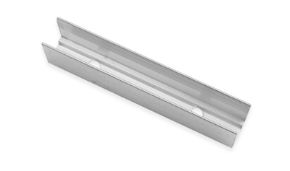
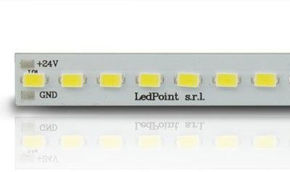
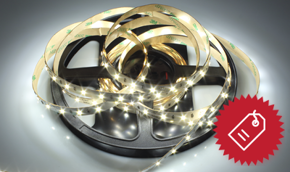
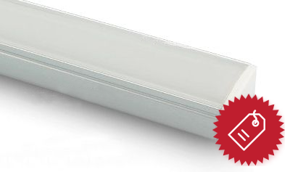
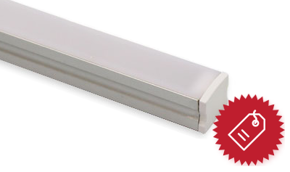
Choosing and installing an LED grow system requires careful design that goes far beyond simply replacing a light fixture. It is about integrating hardware components (strips, profiles, heat sinks) with control software, creating a dynamic lighting ecosystem. Ledpoint offers a comprehensive technical catalog covering every need, from domestic micro-cultivation to professional vertical farm installations. The heart of the system is the LED strips. The choice must be based on objective parameters and specific cultivation needs. 1. Full spectrum warm white/cool white: uses white chips with different color temperatures (e.g., 3000K, 4000K, 6500K). Offers good color rendering and a natural appearance. Ideal for vegetative stages and for domestic cultivation where human vision is also important. Ledpoint's high-efficiency strip line (120-220 lm/W) in this category represents an excellent compromise between performance and cost. Photosynthetic Photon Flux (PPF): Measures the total number of PAR photons emitted by the strip per second (μmol/s). Defines the "power" of the light source. - for lettuces and aromatic herbs: 200-400 μmol/m²/s; - for fruit plants in vegetative phase (e.g., tomato): 400-600 μmol/m²/s; - for flowering and fruiting phase: 600-1000+ μmol/m²/s. An aluminum profile is not a simple mechanical support: it is the primary thermoregulation system for LED strips. The choice of profile directly influences the system's longevity and efficiency. Ledpoint's extruded profiles, available in various shapes (angular, channel, flat), are also designed with dissipation fins that maximize the heat exchange surface. For high-density installations (PPFD > 800), the use of profiles with the ability to integrate active cooling fans or even water-cooling systems can be considered, keeping the chip temperature in an optimal range even under stress conditions. Correct installation involves using thermally conductive tape or silicone paste between the strip and the profile, to eliminate air bubbles that would hinder heat transfer. The true revolution in technological horticulture lies in automation. Controllers transform a static lighting system into a dynamic and responsive tool. Professional LED controllers, like those compatible with Ledpoint strips, use high-frequency (>1kHz) Pulse Width Modulation (PWM) to regulate light intensity. This method, unlike Constant Current Reduction (CCR) dimming, keeps the light's chromaticity unaltered. The most advanced controllers allow programming complex "light recipes": you can set a daily cycle that gradually varies intensity and the ratio between color channels, simulating dawn, noon, and dusk, or apply interrupted light cycles to increase photosynthetic efficiency. High-end controllers can integrate with PAR, air and leaf temperature, humidity, and CO2 sensors. Based on the collected data, the system can self-regulate: for example, increase LED intensity on a cloudy day in the greenhouse, or reduce it if an infrared sensor detects heat stress on the canopy (applied "thermal imaging" technology). This "Adaptive Lighting" approach is the most advanced research frontier, with studies from Wageningen University & Research showing yield increases of up to 15% and energy consumption reductions of 20%. Selecting LED strips: technical and application analysis
Spectrum types and specialized LED chips
2. Horticulture spectrum (horticulture spectrum): combines white chips with monochromatic chips (reds, blues, far-red) in studied proportions. A typical spectrum might be: 30% white (3500K), 50% red 660nm, 15% blue 450nm, 5% far-red 730nm. This ensures maximum photosynthetic photon flux (PPF) and precise morphogenetic control. Ledpoint strips with Samsung LM301H EVO or Bridgelux EB Series chips belong to this elite.
3. Tunable spectrum with independent channels: the highest expression of technology. Strips that mount separate LED channels (e.g., channel A: white + blue, channel B: red + far-red) individually controllable. This allows the spectrum to be varied continuously during the plant's life cycle: a bluer spectrum for the vegetative phase, an increase in red for flowering, the addition of far-red to induce specific responses (e.g., stem elongation in lettuces).Critical parameters: PPF, PPFD, efficiency, and heat dissipation
Photosynthetic Photon Flux Density (PPFD): Measures the number of PAR photons reaching a surface (e.g., the canopy) per second (μmol/m²/s). It is the crucial operational parameter. Various studies, including those published in "Scientia Horticulturae", indicate optimal PPFD values that vary:
Ledpoint's high-efficiency strips (>2.8 μmol/J) allow reaching these targets with energy consumption up to 60% lower than HPS.
Heat dissipation is critical: an LED chip operating at junction temperatures below 85°C ensures longer lifespan (L90 > 50,000 hours) and maintains stable spectral emission. Pairing with aluminum profiles of adequate cross-section is mandatory for professional performance.The role of aluminum profiles and cooling systems
Controllers and automation: the future of horticulture
PWM dimming and spectrum control
Integration with environmental monitoring systems
Horticulture, practical applications: from greenhouses to vertical farms
LED technologies find application in a wide range of scenarios, each with specific requirements guiding component choice. In this scenario, LEDs integrate with natural sunlight, making up for deficits in evening hours, winter, or on low-light days. Linear LED strips are ideal for mounting in parallel rows above crops, thanks to their slim profile that minimizes shading of sunlight. The goal is to maintain a constant DLI (Daily Light Integral), for example 17 mol/m²/day for tomatoes, regardless of external conditions. The ability to instantly turn LEDs on and off (unlike discharge lamps) allows exploiting even short breaks of sunlight without waste. In this context, spectra with added UV-A (385-400nm) can be considered to stimulate the production of secondary metabolites (e.g., anthocyanins, polyphenols) in crops like red basil or strawberries, increasing their nutraceutical value. Here, LED lighting is the sole light source. Control is total and efficiency is the dominant metric. In multi-layer environments like vertical farms, light distribution uniformity (PPFD uniformity) becomes critical. The use of long LED strips, combined with reflectors or opal diffusers, allows achieving a uniformity coefficient greater than 0.8 over the entire cultivation area, ensuring each plant receives the same quantity and quality of light. For fast-cycle crops like microgreens and baby leaf salads, blue-rich spectra are used to obtain compact plants with intense color, with light cycles of even 18-20 hours per day, made sustainable by the low heat emitted by LEDs which avoids thermal stress. Modern nurseries use specialized LED modules for cutting rooting and seedling growth. A spectrum with a high far-red (730 nm) to red (660 nm) ratio can accelerate germination and promote more vigorous initial development. Low-power LED strips (<15W/m) mounted on height-adjustable trestles allow maintaining an optimal distance from the canopy (20-40 cm), maximizing light efficiency and reducing costs. In the breeding phase, the ability to replicate identical light conditions in different environments allows precise isolation of desired genetic traits. Supplemental lighting in greenhouses
Controlled indoor growing
Propagation (cloning and seedlings) and breeding
Towards a precise and sustainable horticulture
The integration of modulated LED systems, intelligent controllers, and high-performance dissipation profiles is leading horticulture towards an era of unprecedented precision. It is not just about replacing a light source, but adopting a new production framework based on data, automation, and resource efficiency. The reduction in water consumption (due to less forced transpiration), the elimination of pesticides (in closed, controlled environments), the possibility of cultivating locally and year-round, and the increase in qualitative and quantitative yields, outline a future where horticulture will be an exact, sustainable, and high-tech science. Ledpoint, with its complete and updated technical portfolio, positions itself as a fundamental partner for farmers, researchers, and enthusiasts who want to be protagonists in this transition, providing the hardware tools and knowledge to build the future of food and greenery.