






Indirect lighting: layering of light with LED strips and aluminum profiles
This guide explores in depth the concept of indirect lighting, explaining the difference between direct and indirect light, light layering techniques, the best solutions with LED strips and aluminum profiles, and how to apply them in every environment of the home, office, store, and any architectural space. Each section is designed for architects, designers, entrepreneurs in the furnishing sector, home automation enthusiasts, and anyone who wants to achieve professional results in interior lighting. If you're looking to understand how to transform a space with light, you're in the right place.
What is indirect lighting?
The term indirect lighting refers to a lighting system in which light does not reach the observer's eye or work surface directly, but is first reflected by one or more intermediate surfaces, typically the ceiling, a wall, a cove, or an opaque surface. This type of lighting produces a soft, diffused light distribution free of harsh shadows, enveloping spaces in a warm and visually comfortable atmosphere. The meaning of indirect lighting goes far beyond aesthetics: it is a technical, functional, and wellness-oriented choice that influences the quality of daily life in homes, productivity in offices, and brand perception in stores and commercial spaces.
Indirect light has been for decades the foundation of the best interior architecture and lighting design projects worldwide. Architects of the caliber of Le Corbusier, Louis Kahn, and Tadao Ando have made the skillful use of reflected light an unmistakable stylistic hallmark. Today, thanks to LED technology and modern aluminum profiles, it is possible to replicate these techniques in any environment, with accessible costs and high-quality results.
According to the Lighting Research Center (LRC) in Troy, New York, environments with predominantly indirect lighting are perceived as more spacious, more relaxing, and more comfortable compared to those with exclusively direct lighting. This translates into a measurable effect on the psychological comfort of occupants: a 2022 research published in the Journal of Environmental Psychology demonstrated that residential environments with predominantly diffused lighting reduce cortisol levels by 12% compared to those with aggressive point lighting.
Indirect lighting: technical and regulatory meaning
On a technical level, the standard UNI EN 12464-1, the European standard on workplace lighting, distinguishes between the concepts of direct illuminance (flux directed toward the useful plane) and indirect illuminance (flux reflected from surfaces). In Italy, the Legislative Decree 81/2008 (Consolidated Safety Act) incorporates these standards for work environments, while for private homes, mainly good practice standards and the energy recommendations of the European EPBD directive apply.
From a photometric point of view, a lighting fixture is classified as "indirect emission" when at least 90% of the luminous flux is distributed upward (CIE 001:2022). Systems that combine upward and downward emission in different proportions are defined as mixed or semi-indirect distribution.
Indirect lighting in project culture
In the world of contemporary architecture, indirect LED lighting has become an essential element of design. It is no longer an aesthetic optional, but a structural component of environmental comfort. The concept of "light as material" introduced by Renzo Piano and developed by numerous international lighting designers implies that light should be considered from the structural design phase, integrating it with drywall, plaster profiles, architectural coves, and every constructive element of the building envelope. LED strips and profiles for indirect lighting have become, in this context, the preferred technical tools for industry professionals.
In the following paragraphs, we will analyze in depth every aspect of this discipline, providing technical data, comparative tables, practical advice, and evaluating the most suitable products for each application.
Direct light vs. indirect lighting: differences, advantages, and disadvantages
Understanding the difference between direct and indirect light is the first step in designing an effective lighting system. These two modes of light distribution are not opposed but complementary: the layering between the two levels is what distinguishes a professional installation from an improvised solution. Direct light serves, indirect light characterizes: modern lighting design uses the former for task functions and the latter to build atmosphere and define spatial perception.
Characteristics of direct light
Direct lighting is that in which the light source emits its flux directly toward the useful plane (a table, work surface, counter) or toward the observer. Recessed spotlights, adjustable ceiling lights, table lamps, and linear LED bars are the main examples of direct light fixtures. This type of lighting offers important advantages:
| Characteristic | Direct Light | Indirect Light |
|---|---|---|
| Luminous Efficiency | High (80-95% of flux downward) | Medium (30-60% of flux after reflection) |
| Shadows | Hard and marked | Absent or very soft |
| Glare | Medium-high risk | Very low risk |
| Space Perception | Compartmentalized, focused | Spacious, enveloping, fluid |
| Atmosphere | Functional, dynamic | Warm, relaxing, sophisticated |
| Visual Comfort | Variable (depends on aiming) | High and constant |
| Typical Use | Work surfaces, reading, accents | General environments, atmosphere, architecture |
| Energy Consumption | Optimized for useful plane | Higher for the same useful level |
Characteristics of indirect light
Indirect lighting uses light reflection on surfaces to achieve uniform and soft distribution. The final result depends on two fundamental factors: the quality of the light source (in terms of CRI, color temperature, and uniformity) and the reflection coefficient of the surfaces on which the light bounces. A white ceiling has a reflection coefficient of approximately 0.85 (85%), which means that 85% of the light that reaches it is redistributed into the environment. A colored or dark ceiling can drastically reduce this value, making indirect lighting less efficient.
For this reason, the calculation of indirect lighting, which we will see in detail in the dedicated section, must always take into account the reflection factors of surfaces, room dimensions, and the position of LED profiles relative to the reflection surfaces. Software such as DIALux, Relux, AutoCAD, and 3ds Max allows precise simulation of these effects before implementation.
Direct and indirect lighting: the winning synergy
True excellence in lighting design is achieved by combining direct and indirect lighting in a layered system. This approach, defined in the UNI 12464 standard as mixed lighting, allows simultaneously meeting regulatory requirements for illuminance on the useful plane (direct light) and those for uniformity and visual comfort (indirect light). Light layering is the technique that elevates a simple electrical installation to a true architectural tool.
History and physical principles of diffused lighting
To fully understand indirect light, it is useful to briefly trace the history of artificial lighting and the physical principles that govern it. This historical and scientific perspective is not only culturally enriching but provides the basis for understanding why today LED strips paired with aluminum profiles represent the ideal technology for creating high-quality environments.
From incandescence to LED: the evolution of diffused light
Since ancient times, oil lamps and candles naturally produced soft, diffused light, without rigid directivity. With the invention of the incandescent light bulb by Edison (1879), artificial light gained greater intensity but maintained omnidirectional emission characteristics. The first applications of artificial indirect lighting date back to the 1920s of the twentieth century, when grand American hotels and theaters began hiding light sources behind decorative plaster cornices, creating soft light effects that we still consider the aesthetic reference standard today.
In the 1970s and 80s, the energy crisis pushed toward neon and compact fluorescent lights, which for their energy efficiency but poor light quality (low CRI, flicker, UV emissions) paradoxically reduced the quality of illuminated environments. The true revolution came with LEDs (Light Emitting Diodes) starting in the 2000s. High-efficiency white LEDs, commercially introduced around 2000-2005 and progressively refined, made it possible to realize indirect LED lighting systems with efficiencies exceeding 90%, lifespans of 50,000 hours, absence of UV and IR, and light quality comparable to sunlight.
The physical principles of light reflection
Light is a form of electromagnetic radiation. Its interaction with surfaces follows the laws of geometric optics and manifests in three main phenomena:
| Phenomenon | Description | Relevance for indirect lighting |
|---|---|---|
| Specular reflection | Light reflects as in a mirror (angle of incidence = angle of reflection) | Glossy surfaces create unwanted reflections; to be avoided |
| Diffuse reflection (Lambertian) | Light disperses uniformly in all directions | Matte white ceilings: maximum diffusion; ideal |
| Mixed reflection | Combination of specular and diffuse | Satin surfaces: good diffusion with some reflections |
To achieve the best indirect lighting, it is fundamental to work with surfaces that guarantee Lambertian (diffuse) reflection. Ceilings with matte white paint, open-pore drywall, or smooth plaster painted white offer the best reflection coefficients (ρ between 0.75 and 0.90).
Color temperature and CRI in indirect lighting
Two fundamental technical parameters for the quality of indirect light are color temperature (CCT) and Color Rendering Index (CRI or Ra).
Color temperature, expressed in Kelvin (K), describes the tonality of light. Typical choices for residential indirect lighting are:
| Color Temperature | Appearance | Recommended Environment |
|---|---|---|
| 2700K – 3000K | Warm white | Living room, bedroom, restaurants |
| 3500K – 4000K | Neutral white | Kitchen, bathroom, office |
| 5000K – 6500K | Cool white / daylight | Technical environments, medical offices, laboratories |
The CRI (Color Rendering Index) measures the fidelity with which a light source reproduces the colors of objects compared to sunlight (CRI = 100). For indirect lighting in quality residential and commercial environments, a CRI ≥ 90 is recommended. For clothing stores, photography studios, and art galleries, a CRI ≥ 95 or even higher is preferred. Some of Ledpoint's LED strips offer CRI > 90 with high color fidelity.
Light layering: the heart of modern lighting design
The concept of light layering is the foundation of every professional lighting project. Understanding and applying this principle means moving from a simple electrical installation to a true architectural project, in which light becomes a compositional tool on par with walls, floors, and furnishings. Layering is not a technique, it is a design philosophy that radically changes the perception of spaces and the quality of the visual and psychological experience of those who inhabit them.
The three fundamental layers of light
Professional lighting design articulates the illumination of an environment into three distinct layers, each with a specific role:
| Light Layer | Type of Light | Function | Typical Sources |
|---|---|---|---|
| 1. Ambient Light (General) | Indirect / diffused | Base illumination of the environment, general visibility | LED strips in coves, ceiling profiles, LED cornices |
| 2. Task Light (Functional) | Direct / point | Illumination for specific activities (cooking, reading, work) | Spotlights, LED strips under cabinets, adjustable lamps |
| 3. Accent Light (Decorative) | Direct or mixed | Highlight architectural elements, artworks, details | RGB LED strips, low-emission profiles, adjustable spots |
To these three classic layers, a fourth is added, increasingly used in contemporary design:
Layer 4: Architectural decorative light: this is the typical indirect lighting of perimeter coves, ceiling light cuts, luminous wall profiles. It does not have a primary photometric function (it does not significantly contribute to lux on the work plane), but defines the atmosphere, perceived volumetry, and visual identity of the space.
How to design light layering
Designing a layered system starts with analyzing the environment's needs:
- Functional analysis: what activities take place? (cooking, reading, work, relaxation, etc.)
- Spatial analysis: what are the dimensions, surface materials, architectural elements to enhance?
- Chromatic analysis: what is the environment's color palette? Do materials reflect light well?
- Layer design: define electrical circuits for each layer, LED profile positions, necessary power.
- Control system: choose the dimming and control method (smart controllers, DALI, DMX, etc.).
- Lighting verification: verify with dedicated software (DIALux, Relux) that illuminance levels meet applicable standards.
Market data: light layering in the Italian residential sector
According to the report "Italian Lighting Market 2023" published by Gfk Italia, 68% of new homes built or renovated in 2023 included at least one indirect LED lighting system, compared to 34% in 2018. This data shows exponential growth in interest for light layering techniques in the Italian residential market. The value of the Italian LED lighting market for residential and commercial use reached 1.4 billion euros in 2023, with an annual growth rate of 8.5% (CAGR), according to Assoilluminazione data.
Also according to the same source, the segment of LED strips and profiles for indirect lighting is the fastest-growing sub-segment, with +22% year over year, driven by demand for integrated solutions for suspended ceilings and drywall coves in residential renovation projects.
LED strips for indirect lighting: complete technical guide
LED strips (or LED tapes) are the enabling technology of modern indirect lighting. In choosing the most suitable strips, numerous technical parameters come into play that determine the final result: the type of LED chip (traditional SMD vs. COB), LED density per meter, power, CRI, color temperature, and IP rating. In this section, we will provide an in-depth technical guide to navigate the vast LED strip market and choose the most suitable solutions for every indirect lighting application.
Types of LED strips: SMD vs. COB vs. CSP
The LED strip market today offers three main chip technologies:
| Technology | Characteristics | Advantages | Disadvantages | Ideal for |
|---|---|---|---|---|
| SMD (e.g., 2835, 5630, 5050) | Discrete LEDs mounted on PCB strip | High efficiency, wide selection, easy replacement | Visible dotting effect at close distances | Functional lighting, direct light under shelves |
| COB (Chip On Board) | Continuous LED chips on ceramic substrate | Completely uniform light, no dotting | More concentrated heat, requires good heat sink profile | Quality indirect lighting, coves, light cuts |
| CSP (Chip Scale Package) | Miniaturized LEDs without substrate | Very high density, excellent uniformity, small size | Higher cost | Narrow profiles, mini-profiles for architectural details |
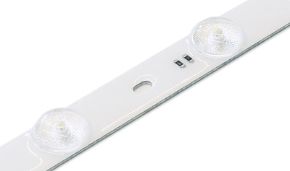
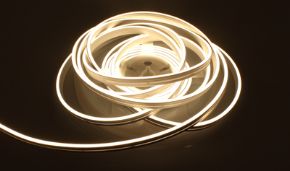
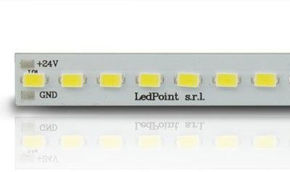
For indirect lighting in ceiling coves, perimeter cornices, and wall profiles, COB technology is the preferred choice. The continuous light without dotting reflects on surfaces uniformly, avoiding the annoying scalloping effects (alternating light stripes and shadows) produced by low-density SMD strips. The Ledpoint COB strip series F52-270-480OR2-W10 is an example of excellence in this segment, with a continuous and uniform light line ideal for every indirect light application.
Available widths for LED strips
LED strips are available in various standard widths, which determine compatibility with aluminum profiles:
| PCB Width | LED Type | Typical Application |
|---|---|---|
| 5 mm | Ultra-narrow COB, CSP | Mini profiles, architectural details, steps, furniture |
| 8 mm | SMD 2835, COB | Standard narrow profiles, thin coves |
| 10 mm | SMD 2835, COB | Standard profiles, universal indirect lighting |
| 12 mm | SMD 5050, high-power COB | Medium profiles, high-power coves, stores |
| 15-20 mm | High Power, RGB, RGBW | Wide profiles, color installations, decor |
Power and calculation of luminous requirements
The calculation of indirect lighting starts with estimating the total power needed to achieve the desired illuminance level. For ambient indirect lighting in residential environments, consider the following reference values:
| Environment | Target Illuminance (lux) | Recommended LED Strip Power (W/m) |
|---|---|---|
| Living room (ambient light) | 100–150 lux | 8–12 W/m |
| Bedroom (evening light) | 50–100 lux | 6–10 W/m |
| Kitchen (general lighting) | 150–200 lux | 12–16 W/m |
| Bathroom (general) | 100–200 lux | 10–14 W/m |
| Office (task lighting) | 300–500 lux | 16–24 W/m |
| Store (accent) | 300–500 lux | 16–24 W/m |
These values are indicative for LED strips with efficiency ≥ 100 lm/W installed in profiles with white ceiling (ρ ≈ 0.80) at 2.7 m height. Precise calculation requires simulation with dedicated software.
How to choose the best LED strip for indirect lighting
To select the best LED strip for a specific indirect light application, it is necessary to consider in order of priority:
- Light uniformity: prefer COB for coves and light cuts. Avoid low-density SMD (e.g., 30 LEDs/m) for close surfaces;
- CRI: minimum 90 for residential use. 95+ for stores, photography studios, galleries;
- Color temperature: Consistent with desired atmosphere (2700-3000K warm, 4000K neutral);
- Adequate power: neither too low (insufficient light) nor excessive (heat, indirect glare);
- IP rating: IP20 for dry interiors. IP44 for bathrooms. IP67 for exteriors or wet areas;
- Profile compatibility: PCB width compatible with the channel of the chosen profile;
How long does an LED strip last and why do spotlights last little
A professional-quality LED strip, correctly installed with an aluminum profile (for heat dissipation) and adequately sized power supply, has a lifespan of 30,000-50,000 operating hours. With 10 hours of daily use, this equals 8-13 years of life. The quality of the power supply is decisive: a low-quality switching power supply with unstable voltage can reduce LED life by up to 40-60%.
LED spotlights often last less for thermal reasons (lack of adequate heat sink), use of low-quality integrated power supplies, or excessive on/off cycles that stress the circuit. In contrast, LED strips installed in metal profiles with good ventilation and quality power supplies systematically last over 30,000 operating cycles.
How much do LED strips cost? Price guide
The cost of LED strips varies considerably based on quality, technology, and brand. Here is an indicative overview of market prices (July 2024):
| Category | Type | Indicative Price per Meter |
|---|---|---|
| Economic (consumer) | SMD 2835, CRI 70-80, no brand | € 2.50 – 5.00/m |
| Medium quality | SMD 2835/5630, CRI 80-85 | € 5.00 – 10.00/m |
| High quality (professional) | SMD/COB, CRI 90-95, brand | € 10.00 – 20.00/m |
| Premium / Sunlike | COB/Full Spectrum, CRI 95+ | € 20.00 – 40.00/m |
| Specialist (RGB, RGBW, tunable) | SMD 5050/COB, multi-channel | € 15.00 – 50.00/m |
A 5-meter professional-quality LED strip (CRI 90+, COB) costs between 50 and 100 euros, to which must be added the cost of the aluminum profile (€ 5-25/m), diffuser, connectors, and power supply. For 20 meters of high-quality LED strip, the total strip cost ranges between 200 and 400 euros, plus profiles (100-500 euros), power supplies (50-150 euros), and controllers (30-100 euros).
Aluminum profiles for indirect lighting: types and applications
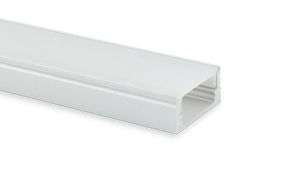
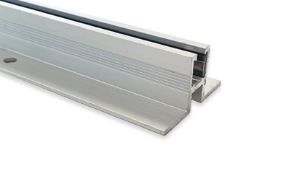
Profiles for indirect lighting in aluminum represent one of the most versatile and powerful tools in the modern lighting designer's toolkit. They are not simple containers for the LED strip: they are true architectural components that define the direction, quality, and appearance of light, protect the strip from mechanical and thermal damage, and actively contribute to the installation's aesthetics. Choosing the right profile is as important as choosing the LED strip, because it directly affects the final quality of indirect light.
Functions of aluminum profiles for LED strips
Aluminum profiles perform four fundamental functions:
- Thermal dissipation: aluminum is an excellent heat conductor. The profile absorbs heat produced by LEDs and dissipates it into the environment, protecting LED chips from overheating and extending their operational life;
- Light beam direction: the profile geometry determines whether light is emitted upward (indirect), downward (direct), sideways, or in both directions (bi-emission);
- Light uniformity: the polycarbonate or opaque PMMA diffuser mounted on the profile cover uniformizes light distribution, eliminating the dotting effect even with SMD strips;
- Protection and finish: the profile protects the strip from dust, impacts, and accidental contact, and offers an aesthetic finish that integrates with the architectural context.
Types of profiles for indirect lighting: complete classification
The market offers an enormous variety of aluminum profiles for LED strips. The most useful classification is by installation type and emission direction:
| Profile Type | Installation | Light Emission | Typical Application |
|---|---|---|---|
| Recessed profile (PR-RE) | Recessed in drywall or wood | Downward (direct) or adjustable | Drywall ceilings, walls, floors |
| Surface ceiling profile | Applied on ceiling surface | Downward | Functional lighting on smooth ceilings |
| Cove profile / cove (PR-DW) | In coves, light cuts, coving | Upward or lateral (pure indirect) | Indirect ceiling lighting, washing |
| Shelf profile (PR-SH) | Under shelves or ledges | Bi-emission (up + down) or single | Bookshelves, kitchen shelves, display cases |
| Floor profile | Flush with floor or walkable | Upward (indirect grazing) | Steps, corridors, path markers |
| Angular profile (corner) | In 45°, 90°, rounded corners | Lateral or diagonal | Wall corners, door frames, niches |
| Mirror/bathroom profile | Behind mirror or perimeter | Lateral (backlighting) | Bathroom mirrors, backlighting |
Ledpoint's LightingLine profiles: the PR-RE and PR-DW series
The LightingLine profile range by Ledpoint is designed to meet every professional indirect lighting need. Below we see the flagship models.
Recessed profiles PR-RE series: absolute minimalism
Profiles of the PR-RE series (such as the PR-RE01-03) are designed for recessing in drywall, wood, or other building materials. Once installed and plastered, the LED source becomes completely invisible within the structure, creating an effect of light that seems to emanate from the architecture itself. This is the most radical approach to the concept of "hidden light": the source does not exist, only the luminous effect exists.
Ideal applications: wall niches, ceiling light cuts, perimeter lighting of suspended ceilings, lighting under steps.
Profiles for coves and pure indirect lighting: PR-DW series
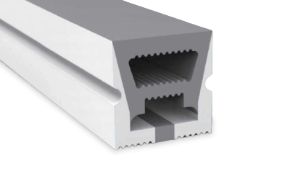
Profiles of the PR-DW series (such as the PR-DW16-03) are specifically designed for wall washing and ceiling washing, techniques of washing surfaces with diffused light. These profiles orient the LED strip toward the reflection surface (ceiling or wall) with a geometry that maximizes uniformity of light distribution, avoiding direct glare.
Ideal applications: perimeter coves, architectural coving, indirect lighting of stone or wood walls, backlighting of decorative walls.
Bi-emission profiles for shelves: PR-SH series
Profiles of the PR-SH series (such as the PR-SH02-03) allow installing the LED strip under a shelf or ledge with simultaneous dual emission: downward to illuminate the surface below (functional light) and upward to create a soft indirect light effect that envelops the shelf itself. This system allows combining direct and indirect lighting in a single element, optimizing both space and budget.
Ideal applications: bookshelves and display cases, kitchen shelves, custom furniture, bar islands, commercial shelving.
LED indirect lighting cornices: design, materials, and installation
LED indirect lighting cornices represent one of the most elegant and versatile solutions for integrating diffused light into interior architecture. Unlike simple technical profiles, luminous cornices combine aesthetic function and photometric function, becoming decorative elements that radically transform the appearance of a ceiling, wall, or niche. The LED luminous cornice is the meeting point between traditional craftsmanship of decorative cornices and latest-generation LED technology.
What is an LED indirect lighting cornice
An LED indirect lighting cornice is an architectural element (in plaster, polystyrene, polyurethane, PVC, or aluminum) that integrates an LED strip profile within it, creating a continuous light effect that propagates along the entire perimeter of the cornice. Unlike classic decorative cornices, which are purely aesthetic, luminous cornices simultaneously perform three functions: they decorate the architecture, hide the light source (the LED strip) from direct view, and diffuse light toward the ceiling or wall in a soft and uniform manner.
Materials and types of indirect lighting cornices
Luminous cornices are available in a variety of materials, each with specific characteristics:
| Material | Characteristics | Advantages | Disadvantages | Context of Use |
|---|---|---|---|---|
| Plaster | Moldable, paintable, heavy | Superior aesthetics, paintable with any color, "boiserie" look | Fragile, heavy, complex installation | Luxury homes, historic halls, high-end renovations |
| Expanded polyurethane (PU) | Lightweight, hydrophobic, workable | Lightweight, hydrophobic, ready to paint, wide profile range | Less impact-resistant than plaster | Residential, restaurants, hotels, offices |
| PVC / Polystyrene | Economical, lightweight, washable | Low cost, easy installation, washable | Less premium appearance, heat-sensitive | Economical installations, stores, temporary environments |
| Aluminum | Precise, modern, excellent dissipation | Maximum dimensional precision, excellent thermal dissipation, industrial/minimal look | Esthetically cold, less suitable for classic styles | Contemporary design, offices, stores, modern architecture |
| Modeled drywall | Integrated in structure, infinitely customizable | Perfect integration in architecture, customizable | Requires masonry work, not removable | Suspended ceilings, architectural coves, light cuts |
Plaster cornices for indirect lighting: tradition at the service of LED
Plaster cornices for indirect lighting represent the most refined and durable solution. Plaster, worked by expert artisans or molded in standardized forms, allows creating elegant cornices with complex profiles (baroque, classic, or contemporary moldings) within which the LED strip integrates invisibly. The result is an indirect plaster lighting that blends perfectly with historic or high-end architecture, without the visual impact of visible technical elements.
For application with LED strips, plaster cornices must be sized with an internal cavity of at least 15-20 mm to contain the LED profile and ensure proper heat dissipation. Painting with matte white paint inside the cornice maximizes light reflection toward the ceiling.
LED indirect lighting cornice prices: buying guide
Prices for indirect lighting cornices vary significantly based on material, profile complexity, and brand. An indicative guide:
| Material / Type | Indicative Price per Meter | Notes |
|---|---|---|
| PVC / Basic Polystyrene | € 3.00 – 8.00/m | Economical solutions, ready for LED strips |
| Medium-quality Polyurethane | € 8.00 – 18.00/m | Good quality/price ratio, wide range |
| Standard Plaster | € 15.00 – 30.00/m | Superior quality, heavier |
| Aluminum technical LED profile | € 5.00 – 25.00/m | Ledpoint technical profiles, various geometries |
| Orac Decor (premium polyurethane) | € 20.00 – 60.00/m | Premium brand, high-end aesthetics |
Wall LED cornices: the vertical luminous cornice
Wall LED cornices (or wall frames) are decorative elements applied vertically on walls to create luminous frames around mirrors, paintings, niches, or simply as an autonomous decorative element. The LED indirect lighting wall cornice produces a soft light halo around the framed element, enhancing the subject and creating a recognizable luminous signature. They are particularly appreciated in bathrooms (around mirrors), bedrooms (around the headboard), living rooms (around the TV wall), and corridors.
How to apply, fix, and hide LED strips in cornices
Installing LED strips in indirect lighting cornices requires some fundamental precautions:
- Surface cleaning and preparation: before applying any adhesive, the surface must be clean, dry, and free of dust or grease. Use isopropyl alcohol to degrease;
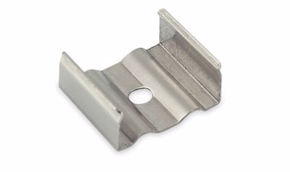
- Choosing the fixing method: LED strips equipped with quality double-sided tape fix directly inside the profile. For aluminum profiles, use the supplied retention clips. For decorative plaster or PU cornices, glue the strip with neutral silicone or use the integrated channel;
- How to hide the power supply: the LED power supply must be positioned in a non-visible point: inside a technical compartment in the suspended ceiling, behind a cabinet, in a recessed box. Connection cables must pass inside the structure (drywall, cove) before finishing;
- How to shield LED light: to avoid direct view of the strip from the normal viewing angle, the profile must be positioned so that the strip is visible only from below or above, never in direct line with the eyes. The minimum height of the cove or cornice above seated eye level (approx. 120 cm) is about 30-40 cm;
- How to avoid dots: always use an opal diffuser on the profile, or choose COB strips. The distance between the strip and the reflection surface affects uniformity: the greater the distance, the greater the light mixing and the lower the dotting effect.
Indirect lighting in suspended ceilings and drywall
Indirect lighting in suspended ceilings is one of the most widespread and appreciated applications in contemporary interior design. The drywall suspended ceiling, with its infinite modeling possibilities, is the ideal support for creating coves, lowerings, luminous niches, and light cuts that radically transform the perception of space. Indirect lighting in drywall is not only aesthetic: it is an integrated architectural system that redraws the perceived geometry of the environment, hides technical systems, improves acoustics, and creates a high-quality atmosphere.
Types of coves and light cuts in drywall
The drywall suspended ceiling allows realizing various solutions for indirect lighting:
| Solution | Description | Luminous Effect |
|---|---|---|
| Perimeter cove | Perimeter lowering of ceiling with compartment for LED strip | Soft light that "washes" the upper ceiling |
| Ceiling light cut | Continuous slot in drywall concealing LED strip | Precise, continuous line of light on ceiling |
| Coving (cornice) | Curved connecting element between wall and ceiling with LED strip | Soft, enveloping luminous halo |
| Luminous niche | Central or positioned lowering with strip on bottom | Recessed luminous area, scenic effect |
| Central lowering (island) | Central ceiling lowering above an element (table, bed) | Defines functional zone and creates intimacy |
How to design indirect lighting in drywall: cove sizing
Designing the cove for indirect lighting in suspended ceilings must respect some fundamental dimensional rules to achieve an optimal aesthetic and photometric result, let's see which ones.
Minimum cove height: to prevent the LED strip from being visible from seated eye height (about 110-120 cm from floor), the cove must have a minimum height of about 20-25 cm relative to the main ceiling. Lower coves require profiles with shielding flanges or recessed strip positioning.
LED channel width: the internal channel of the cove where the LED strip is installed must have a width of at least 8-10 cm to allow correct installation of the profile with diffuser and ensure maintenance.
Distance from wall: the LED strip must be positioned at a distance from the reflection ceiling between 8 and 20 cm. Shorter distances produce more concentrated and potentially non-uniform light; greater distances give more uniformity but require higher power.
8.3 Indirect lighting in drywall: the realization process
The realization of an indirect lighting system in drywall follows an articulated process involving different trades:
- Design phase: definition of dimensions, technical drawing of cove or light cut, choice of LED profiles and strips;
- Electrical system installation: before closing the drywall, lay conduits for electrical cables in all positions planned for LED profiles and power supplies;
- Metal structure: the drywaller builds the load-bearing structure in metal profiles according to the technical drawing;
- Drywall installation: apply drywall (plain, hydrophobic, or fire-resistant depending on environment) on the metal structure;
- Finishing: joint plastering, sanding, and painting with light colors (matte white recommended for inside the cove);
- LED profile installation: insert LightingLine profiles in the prepared channel, run cables, and connect to electrical line;
- LED strip installation: insert LED strip in profile, make connections with appropriate connectors, and connect to power supply;
- Power supply and controller installation: install Mean Well power supply and Skydance controller in a hidden technical space (above suspended ceiling or in recessed box) and connect to strip and mains;
- Testing and commissioning: verify operation, dimming, and light uniformity, and make any adjustments.
Ceiling indirect lighting: coves, light cuts, and coving
Ceiling indirect lighting is the most classic and sought-after form of diffused lighting in interiors. The ceiling illuminated from within transforms a neutral space into a luminous architecture, giving the impression of a surface that emits its own light. This technique, used in the greatest hotels, restaurants, and luxury homes worldwide, is now accessible to anyone thanks to the simplicity and cost-effectiveness of LED strips paired with aluminum profiles for ceiling indirect lighting.
Coving: perimeter indirect lighting
Coving (or luminous cornice) is one of the most elegant techniques for ceiling indirect lighting. It consists of an architectural element (in drywall, plaster, or PU) that connects ceiling to wall, creating a cavity within which the LED strip is hidden. The light projected toward the ceiling "washes" it uniformly, creating a soft, continuous luminous halo that envelops the entire perimeter of the room.
Coving has ancient origins (the perimeter cornices of Renaissance and Baroque palaces performed a similar function with torches and candles), and its modern translation with LED strips represents a happy meeting between architectural tradition and contemporary technology. Many architects and designers choose coving with LED strips as the main lighting solution for living rooms, dining rooms, and corridors, then integrating spotlights or lamps for task lighting.
Light cuts: geometric precision in ceiling lighting
A light cut is a linear slot cut into the ceiling, generally in drywall, within which a low-emission LED profile is housed. Unlike coving, which produces a broad luminous halo, the light cut creates a precise, almost surgical luminous line that defines geometries on the ceiling and marks the perimeters of lowerings. Light cuts are particularly appreciated in contemporary and minimalist design, where clean surfaces and precise lines dominate the composition.
To realize a perfect light cut, it is fundamental to choose a low-emission profile (Ledpoint's PR-RE01-03, for example) with a narrow opal diffuser, which concentrates light toward the outside of the slot without illuminating the interior of the compartment. The ideal strip for this application is a high-uniformity COB, such as Ledpoint's F52-270-480OR2-W10.
Ceiling indirect lighting: errors to avoid
The experience of thousands of documented installations has highlighted some recurring errors in ceiling indirect lighting:
- Cove too low: If the cove is below 200-210 cm, the LED strip becomes visible when standing. Golden rule: the strip must not be visible from eye height at any point in the environment;
- Insufficient distance from surface: A strip too close to the ceiling produces luminous striations rather than uniform distribution. Minimum recommended distance: 10 cm for COB strips, 15 cm for SMD strips;
- Colored or dark reflection ceiling: Drastically lowers efficiency. If the ceiling is colored, indirect light will assume that chromatic tint, potentially distorting color rendering;
- Incorrectly sized power supply: A power supply at capacity limit overheats and reduces LED life. Always use a power supply with at least 30% margin;
- Non-uniform strip: Low-density SMD produce visible dotting. Use COB or high-density SMD (≥120 LEDs/m).
Wall indirect lighting: techniques and profiles
Wall indirect lighting, or wall washing, is a powerful technique to enhance vertical surfaces, create visual depth, and add light layering to an environment. A wall in stone, wood, architectural concrete, or simply painted plaster can become an element of great visual impact if correctly "washed" with grazing or diffused light. Wall washing with LED strips and profiles is one of the strongest trends in interior design in 2024, both in luxury residential spaces and in commercial venues and contemporary offices.
Grazing light vs. washing light: technical differences
In wall washing with indirect lighting, there are two fundamental approaches:
| Technique | Description | Effect | Ideal Tool |
|---|---|---|---|
| Grazing light | Light hits the wall at a very low angle, enhancing textures | Enhances every imperfection and texture of the wall, dramatic effect | Floor or low profile, lateral LED strip |
| Washing light | Light uniformly illuminates the wall from above or below | Uniformly illuminated wall, enhanced colors, no harsh shadows | PR-DW profiles in perimeter cove or ceiling |
Profiles for wall washing: positioning and choice
For correct wall washing with wall indirect lighting, the position of the LED profile is decisive. The general rule is that the profile must be positioned at the same distance from the wall as it is from the reflection surface (ceiling or floor). In practice, for a wall 2.70 m high and a profile installed on the ceiling 30 cm from the wall, you will need an illumination angle that covers the entire height of the wall.
Ledpoint's LightingLine profiles are available in versions specifically designed for wall washing, with emission angles optimized to cover walls of different heights at different distances. The choice of diffuser (transparent for maximum intensity, opal for maximum uniformity) allows adjusting the balance between efficiency and light softness.
Indirect lighting in living room: design and layering
The living room is the environment where indirect lighting expresses its maximum potential. It is the space where one lives, relaxes, socializes, and watches television: different activities that require different light configurations. Proper design of living room diffused lighting allows transforming the same space into multiple different environments simply by varying the light configuration, without changing a single piece of furniture. Light layering is the key to the modern quality living room.
The lighting scheme of the modern living room
A contemporary quality living room typically provides four independent and dimmable lighting circuits:
- Circuit 1 — Indirect ambient light: perimeter coves or coving with COB LED strips at 2700-3000K. Illuminates the entire environment with soft light. Intensity: 80-150 lux on the plane.
- Circuit 2 — Accent light (TV wall): LED strip backlighting behind the TV wall or in the TV niche, with diffused light that reduces contrast between screen and wall, reducing eye strain. Temperature: 6500K (cool white) to reduce glare during viewing.
- Circuit 3 — Task light (reading/conversation area): ceiling spotlights or adjustable floor/table lamps for the reading area. High intensity, adjustable.
- Circuit 4 — Decorative light: color LED strips (RGB or tunable white) to personalize the atmosphere in the evenings: warm light for romantic dinners, colored light for events, neutral light for working from home.
Where to put LEDs in the living room: optimal positions
Based on design experience and documented user preferences, the optimal positions for LED strips in the living room are:
| Position | Effect | Recommended Strip | Notes |
|---|---|---|---|
| Perimeter ceiling cove | Enveloping ambient light | COB 2700-3000K, 10-14 W/m | Main indirect light layer |
| Behind TV wall | Bias lighting, reduces eye strain | COB/SMD tunable white 4000-6500K | Important for those who watch a lot of TV |
| Under the sofa | "Floating" effect, nighttime path marker | SMD 2700K low power | Suggestive, very requested in current design |
| Inside the bookshelf | Enhancement of books and objects | COB or high-density SMD, CRI 95+ | PR-SH bi-emission profile for shelves |
| On the baseboard | Path marker, grazing light on floor | SMD low power, 2700K or RGB | Elegant and functional at night |
| Decorative niche or lowering | Highlighting decorative objects | COB CRI 93+, 3000K | Enhances sculptures, vases, artworks |
How to make living room LEDs change color: tunable white and RGB
One of the most appreciated functionalities in contemporary installations is the ability to make LEDs change color based on time of day, activity, or mood. There are two main approaches:
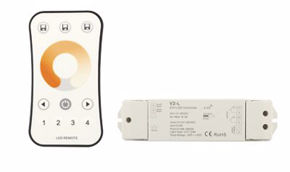
Tunable White (dynamic white): the LED strip contains two LED channels, one warm (2700K) and one cool (6500K), which the controller mixes in variable proportions to obtain any intermediate color temperature. This solution is ideal for adapting light to the circadian cycle: warm in the evening (promotes relaxation and melatonin production), neutral during the day (promotes concentration). Skydance V2-L series controllers allow managing dynamic white with great precision via the Tuya Smart app.
RGB / RGBW: RGB (or RGBW, with added pure white) LED strips allow creating any color of the visible spectrum. They are ideal for decorative, scenic applications, or for content creators who want to personalize their video backgrounds.
Indirect lighting in kitchen: functionality and design
The kitchen is the environment where direct and indirect light must coexist with maximum functional efficiency. Indirect light serves to create a comfortable atmosphere throughout the kitchen, while direct light is indispensable for precisely illuminating work surfaces, stove, and sink. A well-designed lighting project for the kitchen precisely distinguishes the two layers, ensuring safety during work moments and pleasantness during convivial moments.
Kitchen lighting scheme
The typical scheme for kitchen indirect lighting provides:
- Ambient light: LED strips in cove above high cabinets or in suspended ceiling, with indirect light that uniformly illuminates the entire kitchen;
- Task light under wall cabinets: LED strips installed in profiles on the lower part of wall cabinets directly illuminate the work surface with high intensity (300-500 lux). Use high-CRI strips to correctly recognize food colors. Recommended bi-emission profile;
- Accent light: LED strips inside display cases, in glass-door compartments, or in decorative niches with warm light that enhances objects;
- Light on the island: for kitchens with central island, pendant lamps or LED strips in the island's perimeter profile for precise spatial definition.
Plants in the kitchen and LED light: a virtuous combination
A growing trend in contemporary kitchen design is the insertion of aromatic plants and medicinal plants (basil, rosemary, mint, lavender, thyme) grown directly in the kitchen in small pots or in vertical systems. Ledpoint's Full Spectrum or Sunlike LED strips, thanks to their ability to emit all components of the visible spectrum in a balanced way, can support the growth of aromatic plants even in environments lacking sufficient natural light. This application of artificial indirect solar lighting for edible and aromatic plants is perfectly compatible with LED profiles to install above herb shelves.
Indirect lighting in bedroom: wellness and atmosphere
The bedroom is the environment where light quality has the most direct impact on physical and mental well-being. Bedroom indirect lighting must fulfill very different functions throughout the day: from morning light that facilitates waking, to afternoon light suitable for reading, to evening light that prepares the body for sleep. Personalizing bedroom light via tunable white systems and smart controllers is one of the most effective investments for improving sleep quality and daily productivity.
Bedroom lighting scheme
An ideal project for indirect lighting in the bedroom includes:
- Perimeter cove or coving: COB LED strip with adjustable temperature (2700-6500K tunable white) for main ambient light. 100% dimmable;
- Headboard backlighting: COB LED strip behind or around the headboard, with warm and soft light. Creates a scenic effect of great visual impact and provides adequate light for reading in bed;
- LED strip under the bed: ultra-low dimmed nighttime orientation light (10-30 lux) for the path to the bathroom at night without disturbing the partner;
- Wardrobe lighting: LED strip with PIR sensor inside the wardrobe for automatic light upon opening. CRI 95+ to correctly evaluate clothing colors.
Circadian wellness and LED light in the bedroom
The circadian rhythm is the biological cycle of about 24 hours that regulates sleep, wakefulness, body temperature, and numerous physiological processes. Light is the main zeitgeber (synchronizer) of the circadian rhythm: blue light (450-490 nm) suppresses melatonin production and promotes alertness; red and orange light (600-700 nm) promotes it.
Proper indirect LED lighting in the bedroom, managed with a tunable white controller like the Skydance V2-L, allows automatically programming the transition from cool light (6500K, high energy) in the morning to warm light (2700K, relaxation) in the evening hours, synchronizing the system with the sun's natural rhythm. This approach, called Human Centric Lighting (HCL), is recognized by the scientific community as an effective support for sleep quality and general well-being.
Indirect lighting in bathroom: safety and light quality
The bathroom is one of the most complex environments to light, for two fundamental reasons: electrical safety regulations (CEI 64-8, section 701) that impose precise restrictions on the installation of electrical appliances based on distance from water sources, and the need to combine functional light (for makeup, shaving, facial care) with atmospheric light (for relaxation in the tub or shower). Indirect lighting in the bathroom, realized with LED strips and IP44-IP67 profiles, is the safest and most elegant solution for this delicate environment.
Safety zones in the bathroom and IP ratings for LED strips
The CEI 64-8 standard divides the bathroom into four risk zones:
| Zone | Position | Minimum Required IP | LED Strip Application |
|---|---|---|---|
| Zone 0 | Inside tub/shower | IPX7 | IP68 submersible LED strips (special cases) |
| Zone 1 | Directly above tub/shower up to 2.25 m | IPX4 | IP44 LED strips with SELV voltage (12V or 24V) |
| Zone 2 | 60 cm around zone 1 | IPX4 | IP44 LED strips, SELV voltage |
| External zone | Beyond zone 2 | IP20 (with protection) | Standard LED strips in closed profiles |
Bathroom mirror lighting: light for makeup
The light around the bathroom mirror is fundamental for the environment's functionality. The most professional solution is installing a wall LED cornice around the mirror, with high-CRI COB LED strips (≥ 95) and color temperature around 3000-4000K. This configuration reproduces the type of lighting in theatrical dressing rooms, light coming from all sides of the face, without shadows, guaranteeing very high-quality makeup and shaving results.
Avoid installing light only above or only below the mirror: it produces unattractive and unwanted shadows under the eyes or under the chin. The LED indirect lighting wall cornice perimeter to the mirror is the optimal solution.
Indirect lighting in office: productivity and visual comfort
Indirect lighting in offices is one of the most studied topics by ergonomic and lighting research in recent decades. Numerous studies demonstrate that proper workplace lighting significantly influences productivity, concentration, reduction of visual fatigue, and general well-being of workers. In Italy, the UNI EN 12464-1 standard establishes minimum illuminance requirements in offices: 500 lux on the work plane for VDT work, with uniformity U0 ≥ 0.6 and glare index UGR ≤ 19.
Why indirect lighting is preferred in modern offices
Contemporary open-plan offices, with VDT workstations and highly reflective screens, suffer particularly from the problem of reflections and glare from direct light sources. Office indirect lighting solves this problem by distributing light uniformly via ceiling reflection, eliminating direct light sources in the visual field and drastically reducing annoying glare (veiling luminance).
Research conducted by Delft University (NL) and the IES (Illuminating Engineering Society, USA) has demonstrated that offices with predominant indirect lighting record:
- 25-30% reduction in cases of visual fatigue among workers;
- 15% increase in perceived subjective productivity;
- 20% reduction in absenteeism for reasons related to headaches and visual disturbances.
Indirect lighting solutions for office with LED strips
To realize a office indirect light lighting system compliant with standards and comfortable, various solutions can be adopted:
| Solution | Description | Advantages |
|---|---|---|
| Bi-emission ceiling profiles | Suspended from ceiling, emit light both upward (indirect) and downward (direct) | Combines advantages of both modes; UNI standard respected |
| LED perimeter coves | Coves around perimeter with LED strips toward ceiling | Uniformly illuminated ceiling; UGR ≤ 19; elegant |
| LED panels with opal diffuser | Ceiling LED panels with deep diffusion | Economical and flexible solution; variable UGR |
| Indirect light office lamps | Desk or floor lamps with indirect light | Flexible; suitable for individual workstations |
Indirect lighting in stores and commercial environments
Indirect lighting in stores is a strategic element of retail design. Numerous neuromarketing research documents that lighting quality directly influences purchasing behavior, time spent in store, and brand perception. Well-designed store indirect lighting can increase sales by 20-30% compared to generic lighting, simply through correct product enhancement and creation of an engaging atmosphere.
Lighting strategies in retail design
Retail lighting is articulated in three strategic levels:
- Ambient lighting (indirect light): establishes the tone of the experience in the store. Warm, soft light for luxury boutiques, neutral, bright light for technology stores, dynamic light for concept stores;
- Product lighting (accent light): illuminates single products or display areas with high intensity and very high CRI (≥95) to enhance their colors and textures. High-CRI LED strips in profiles above gondolas;
- Visual merchandising (luminous cornices): headers, display windows, backlit signs, and LED luminous cornices that signal promotional areas and create visual focal points.
Indirect lighting in the vaults of historic stores
Indirect lighting of vaults is a fascinating challenge encountered in stores and restaurants set up in historic buildings (churches, medieval cellars, galleries with barrel or cross vaults). Indirect light, oriented toward the vault, enhances its three-dimensionality and texture, creating a unique atmosphere of extraordinary emotional impact. For these applications, low-emission profiles with high-CRI LED strips (≥ 95) and warm temperature (2700-3000K) are used, positioned along the vault springing lines or in perimeter niches.
Indirect exterior lighting: gardens, facades, and terraces
Exterior indirect lighting brings the same aesthetic and functional qualities of diffused light to outdoor spaces (gardens, terraces, facades, pergolas, and porticos). Unlike direct exterior lighting (spotlights, floodlights), indirect exterior light creates enveloping and safe nighttime environments, without glare and without impact on nocturnal fauna (insects, migratory birds). The use of IP67 or IP68 LED strips in exterior profiles is the most effective and durable solution for realizing indirect lighting in environments exposed to rain, humidity, and variable temperatures.
Applications of exterior indirect lighting
| Application | Technique | Recommended LED Strip |
|---|---|---|
| Pergola perimeter band | LED strip in pergola ceiling profile | COB IP65, 2700-3000K |
| Facade washing | Ground floodlights with strip or grazing light profiles | High-power SMD IP67, CRI 90+ |
| External steps and stairs | Flush floor LED profile, lateral light | COB IP67, 2700K low power |
| Handrails and parapets | LED strip in handrail profile | COB IP44-IP65, 3000K |
| Vertical garden | LED strip with grazing light on medicinal and aromatic plants | Full Spectrum IP44, suitable for plant growth |
How to install LED strips for indirect lighting: step-by-step guide
Correctly installing an LED strip for indirect lighting requires a series of operations that, if performed with care, guarantee a professional and lasting result. The following guide covers all installation phases, from purchasing materials to final power-on, with particular attention to the most common errors and trade tricks. Correct installation is the factor that determines whether the light will look professional or amateur.
Required materials
- LED strip (COB or high-density SMD) of necessary length + 10% waste;
- Aluminum profiles (Ledpoint LightingLine) with diffuser and mounting clips;
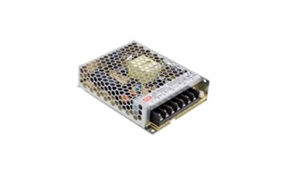
- Mean Well power supply sized (strip power × length × 1.30);
- Controller (Skydance V-L or equivalent) if dimming or color change is desired;
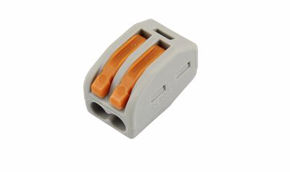
- Connectors for LED strip joining (solderless or with soldering);
- Conduit or corrugated tube for cables;
- Tester/multimeter for verification;
- Isopropyl alcohol for surface cleaning;
- Screws and anchors for profile fixing (or structural silicone).
How to install LED strips step by step
- Step 1 — Planning: measure the perimeter to illuminate, calculate total power, choose adequate power supplies and profiles. Draw a wiring diagram;
- Step 2 — Profile preparation: cut profiles to necessary measurements with a metal saw or cutter. Round cut edges with fine sandpaper;
- Step 3 — Profile fixing: fix profiles in final position (cove, wall, suspended ceiling) via mounting clips, screws, or structural silicone. Verify level with spirit level;
- Step 4 — Cable routing: run electrical cables (AWG 22-24 for low loads, AWG 18-20 for high loads) through prepared conduits. Leave sufficient tail at each profile exit;
- Step 5 — LED strip cutting: cut the LED strip only at indicated cut points (usually marked with a dashed line or scissors symbol). Cut with sharp scissors cleanly;
- Step 6 — Strip application in profile: remove backing of double-sided tape and apply strip in profile channel, pressing firmly along entire length. Start from one end and proceed without lifting the strip;
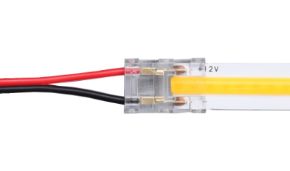
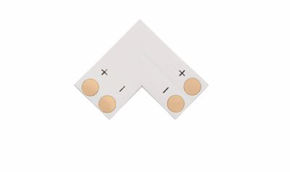
- Step 7 — Electrical connection: connect strips to power cable via appropriate connectors (terminal connectors, pressure connectors, or by soldering). Respect polarity (+/–);
- Step 8 — Diffuser mounting: insert diffuser (transparent or opal cover) in profile, sliding from one end to the other;
- Step 9 — Power supply and controller installation: install Mean Well power supply in prepared technical space. Connect AC input from mains, DC output to LED strip (via controller if present);
- Step 10 — Test and verification: before definitively closing structures, power the system and verify operation, light uniformity, and dimming. Correct any issues (loose connections, poorly positioned strips).
How to attach LEDs to wall without nails
To fix LED strips or profiles without nails or screws (e.g., on marble, ceramic, glass walls), several solutions exist:
- Neutral structural silicone: suitable for smooth, non-porous surfaces. Resistant, but not removable without surface damage;
- 3M VHB double-sided tape: excellent resistance on smooth surfaces. Removable with specific solvent without leaving traces;
- Quality adhesive backing LED strips: professional-quality strips have resistant double-sided tape that does not peel off with LED heat. Avoid economical strips with poor-quality adhesive;
- Magnets: on metal surfaces, profiles with magnetic backing can be used. Useful for temporary or removable installations.
How to make an LED strip dimmable
To dim an LED strip, the entire system must be designed for dimming:
- Dimmable LED strip: all quality LED strips are dimmable via PWM or CC dimming. Do NOT use incandescent lamp dimmers on LED strips;
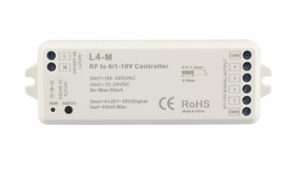
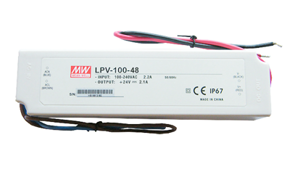
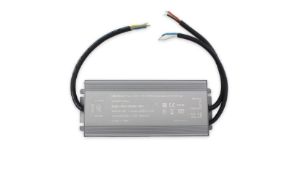
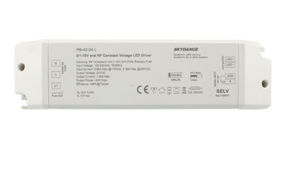
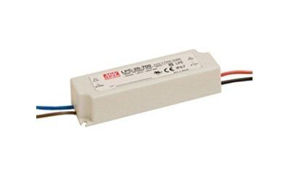
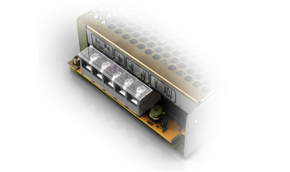
- Dimmable power supply: the power supply must be compatible with the chosen dimming technology (PWM, 0-10V, DALI, TRIAC). Mean Well NPF and HLG series power supplies have dedicated dimming inputs;
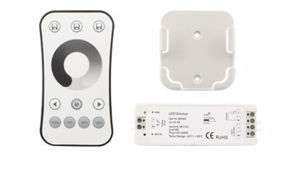
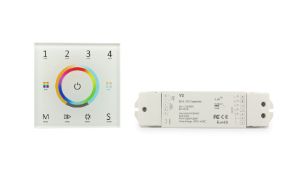
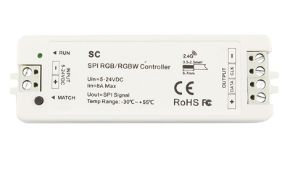
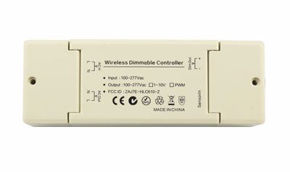
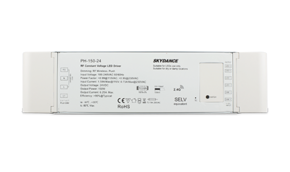
- Dimmer controller: the controller (e.g., Skydance V1-L for monochrome, V2-L for dynamic white) manages dimming and connects to Tuya Smart app for smartphone control.
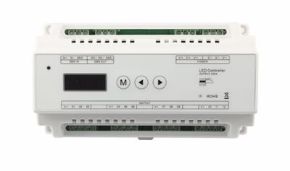
For complex professional systems, the DALI protocol (Digital Addressable Lighting Interface) allows individually controlling each LED strip segment in an installation, with 4096 dimming levels and total absence of flicker. Mean Well DALI drivers and Skydance TD-K series DALI masters are the recommended solutions for high-end residential and commercial installations.
Power supplies for LED strips: sizing and choice
The power supply is the most critical, and often most neglected, component of an indirect LED lighting system. A low-quality or poorly sized power supply is the main cause of premature failures, flickering, electromagnetic emissions, and reduced LED life. Investing in a Mean Well professional-quality power supply is the smartest choice to guarantee longevity and reliability of the entire system.
Types of power supplies for LED strips
| Type | Characteristics | Application |
|---|---|---|
| Constant Voltage (CV) | Fixed voltage output (12V or 24V DC). Current varies based on load. | Standard LED strips. Most common for LED strips. |
| Constant Current (CC) | Fixed current output. Voltage varies based on load. | High-power LEDs, single COB modules. Less used for strips. |
| CV + CC (hybrid) | Combination of both modes. | Mixed applications, usage flexibility. |
How to size the power supply: the 30% rule
The golden rule of LED power supply sizing is as follows:
Power supply nominal power ≥ Total strip power × 1.30
This 30% safety margin guarantees that the power supply never operates at its capacity limit, reducing internal overheating and extending its life. A power supply operating continuously at 100% load overheats, degrades internal components, and has an operational life reduced by 40-50% compared to one operating at 70%.
Practical example: For 10 meters of 14 W/m LED strip → Total power = 140 W → Minimum power supply: 140 × 1.30 = 182 W. Choose the 200W model (Mean Well HLG-200-24A).
Mean Well power supplies for Ledpoint LED strips
The Mean Well power supply range available on Ledpoint covers every application need:
| Series | Power | IP | Dimmer | Ideal Application |
|---|---|---|---|---|
| NPF-40/60/90 | 40-90 W | IP67 | No (-D models with 0-10V) | Small/medium interiors, 24V strips |
| XLN-60/100/150 | 60-150 W | IP20 | No | Internal technical compartments, high efficiency |
| HLG-100/150/240 | 100-240 W | IP67 | Yes (-A/-AB models) | Professional installations, exteriors, dimming |
| ELG-100/150/200 | 100-200 W | IP67 | Yes (DALI, 0-10V) | Home automation systems, DALI control |
Smart controllers and home automation for indirect lighting
The control system is the element that transforms a simple LED installation into a human centric system capable of adapting to real-life needs. An indirect lighting installation without dimming and automatic control is like a car without a gearbox: it works, but lacks the flexibility that constitutes its true value. Latest-generation smart controllers allow managing each layer of the luminous system with millimetric precision, from smartphone or with voice commands, programming sophisticated scenarios and automations.
Ledpoint's Skydance controllers: WiFi and DALI technology
The Skydance controller range available on Ledpoint offers solutions for every complexity level:
| Model | Strip Type | Protocol | App | Application |
|---|---|---|---|---|
| V1-L | Monochrome (white) | WiFi 2.4 GHz | Tuya Smart / Smart Life | Coves, coving, single zones |
| V2-L | Dynamic white CCT | WiFi 2.4 GHz | Tuya Smart / Smart Life | Bedroom, living room HCL |
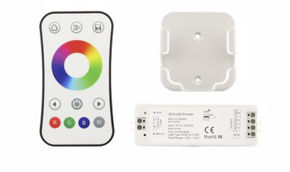
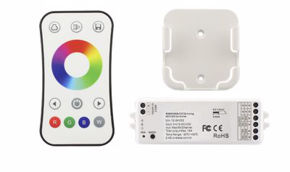
| V4-L / V5-L | RGB / RGBW | WiFi 2.4 GHz | Tuya Smart / Smart Life | Decorative environments, entertainment |
| TD-K (DALI master) | All types (via DALI) | DALI 2.0 | Professional DALI software | Offices, stores, hotels, home automation |
| DMX512 decoder | RGB, RGBW, TUNABLE | DMX512 | DMX console | Events, shows, illuminated architecture |
PIR sensors and ambient light sensors for automation
Integrating presence and ambient light sensors brings indirect lighting automation to a higher level:
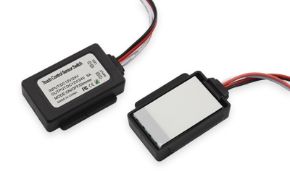
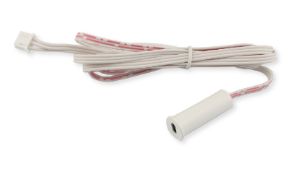
PIR Sensor (Passive Infrared): detects motion and automatically activates or deactivates lighting. Ideal for corridors, bathrooms, staircases, garages. Ledpoint's ER-AV model integrates directly with Skydance controllers. Also allows automatic dimming: light at 100% in presence, reduction to 20-30% in prolonged absence (stand-by), switch-off after timer.
Ambient light sensor (photoreceptor): measures natural brightness of the environment and automatically adjusts artificial lighting intensity to maintain a constant illuminance level (e.g., 300 lux in an office). Contributes to optimal energy management of the system.
Indirect lighting in AutoCAD and 3ds Max: tools for professionals
Professional design of indirect lighting requires the use of specialized software that allows simulating luminous effects before realization. Among the most used by architects and lighting designers, AutoCAD (for executive design of systems), 3ds Max with VRay or Corona Renderer (for photorealistic visualizations), and DIALux evo (for normative lighting calculations) stand out.
Indirect lighting in AutoCAD: how it is represented
In AutoCAD, indirect lighting AutoCAD is represented mainly in plan and section, through:
- Standardized graphic symbols: LED strip lines are represented with a continuous colored line (standard: yellow) in the installation position, with annotations indicating strip type, power, and color temperature;
- Electrical diagrams: wiring is documented in single-line diagrams indicating supply lines, circuit derivations, position of power supplies and controllers;
- Construction sections: sections of coves and profiles show architectural dimensions, position of LED profile inside the cove, and distances from reflection surface.
Indirect lighting in 3ds Max: photorealistic rendering
In 3ds Max with VRay or Corona Renderer, indirect lighting in 3ds Max is simulated using IES photometric type sources (based on real photometric files provided by manufacturers) or Area Light type sources (light planes) that simulate LED strip emission inside the profile.
The most precise technique for simulating indirect lighting in 3ds Max involves:
- modeling the cove or profile with real geometry (precise dimensions);
- inserting an Area Light source (plane) in the LED strip position, with intensity, color temperature, and angular distribution parameters of the real strip;
- activating Global Illumination (GI) in the rendering engine to simulate light reflection on surfaces;
- setting surface materials with correct reflection coefficients (matte white: reflectance ≈ 85-90%).
Light quality, health, and circadian well-being
The relationship between light and human health is one of the most active research fields in contemporary medicine. Light is a drug, in a metaphorical but also literal sense, capable of influencing circadian rhythm, mood, cognitive productivity, immune response, and sleep quality. High-quality indirect LED lighting, particularly with Full Spectrum or Sunlike spectrum, can be designed to systematically support the physical and mental well-being of occupants.
Sunlike LEDs: solar spectrum for well-being
The Sunlike series by Ledpoint uses LED chips developed in collaboration with Seoul Semiconductor to reproduce the sunlight spectrum with unprecedented fidelity. Unlike traditional white LEDs (which use a blue chip + yellow phosphor with an artificial peak at 450 nm), Sunlike LEDs use a violet pump (405-415 nm) + an RGB-P phosphor mix that reproduces the entire visible spectrum continuously, without the blue light peak.
Documented advantages of Sunlike LEDs for well-being:
- CRI > 97: color perception virtually identical to sunlight;
- R9 > 95: excellent reproduction of red tones (skin, food, flowers);
- lower blue light component at 450 nm: lower impact on nighttime circadian rhythm;
- continuous spectrum: reduction of visual fatigue for prolonged exposures.
Sunlike strips are used for residential and professional installations where light quality for well-being is a priority.
Do LED lights harm health?
The question "do LED lights harm health?" is one of the most frequent in the sector. The scientific answer is articulated: professional-quality LEDs, used correctly, are not harmful to health. Indeed, compared to fluorescent lamps (which emit UV, flicker at 50 Hz, and contain mercury), quality LEDs represent a decisive improvement for the health of illuminated environments.
The real risks associated with LEDs are:
- Blue light hazard: prolonged direct exposure to LEDs with strong peak at 450 nm at high intensity. Mainly concerns low-quality LEDs with high blue light content. Does not concern indirect lighting systems, where light is never directed toward the eyes;
- Flicker: LEDs powered by low-quality drivers may present intensity modulation at perceptible frequency (< 100 Hz), causing visual fatigue. Quality PWM drivers at frequency ≥ 1000 Hz eliminate this problem.
Direct and indirect natural lighting
The sun is the ideal model for every artificial lighting system. Indirect natural light, that which penetrates an environment after being reflected by external surfaces (the sky, light-colored walls of surrounding buildings, the ground), is considered the most comfortable light quality for humans, because it is what we have evolutionarily adapted to over millennia of history. Indirect natural daylight is the reference parameter toward which all the best current LED technologies tend.
How natural light influences artificial light design
A good lighting design project always considers natural light as the first layer of illumination. Windows, skylights, glass facades, and internal courtyards are architectural elements that bring indirect solar lighting into environments. The designer must integrate artificial light with natural light so that the two systems complement rather than conflict with each other.
Tools such as ambient light sensors (daylight sensors) allow automatically adjusting artificial lighting intensity based on natural light contribution, guaranteeing a constant illuminance level throughout the day and optimizing energy consumption. This system, called daylight harvesting, can reduce artificial lighting energy consumption by 30-60% in environments with good natural exposure.
Dental office lighting with indirect light
Dental office lighting with indirect light is a topic of great specialist relevance. In dental practices, ambient light quality is critical for two main reasons: the need for excellent color rendering (CRI ≥ 95) to correctly evaluate tooth, gum, and prosthetic material colors, and patient comfort, who spends prolonged periods in supine position with eyes exposed to the illuminated ceiling. Indirect lighting in the suspended ceiling of dental practices solves both problems: it eliminates direct light sources in the patient's visual field and distributes light uniformly and comfortably.
Lighting requirements for dental practices
The UNI EN 12464-1 standard and FDI (Fédération Dentaire Internationale) guidelines indicate the following requirements:
| Area | Illuminance (lux) | Minimum CRI | CCT |
|---|---|---|---|
| Waiting room | 200 lux | 80 | 3000-4000K |
| Reception area | 500 lux | 80 | 4000K |
| Operating room (ambient) | 500 lux | 90 | 4000-5000K |
| Dentist work plane | 1000-5000 lux | 95+ | 5500-6500K (daylight white) |
The ambient light of the operating room is ideally realized with high-CRI LED strips in suspended ceiling coves, while specific operative light is provided by specialized lamps mounted on the dental unit.
Prices, costs, and economic factors of LED installations
The economic evaluation of an indirect LED lighting system must consider not only the purchase cost of materials, but also installation costs, operating costs (electricity, maintenance), and system useful life. A quality LED system has a significantly lower Total Cost of Ownership (TCO) compared to traditional solutions, thanks to greater energy efficiency and extended lifespan.
Indicative cost of an indirect LED lighting system for living room (50 sqm)
| Component | Quantity | Unit Cost | Total |
|---|---|---|---|
| COB LED strip 10 W/m | 12 m | € 14.00/m | € 168.00 |
| LightingLine profiles PR-DW16-03 | 12 m | € 12.00/m | € 144.00 |
| Mean Well power supply HLG-150-24A | 1 | € 85.00 | € 85.00 |
| Skydance V1-L controller | 1 | € 35.00 | € 35.00 |
| Connectors, cables, accessories | 1 set | € 40.00 | € 40.00 |
| Total materials | € 472.00 | ||
| Labor installation (electrician) | 8 hours | € 45.00/hour | € 360.00 |
| Total turnkey system | € 832.00 |
These prices are indicative for July 2024 and do not include masonry, drywall, and painting work.
Energy savings with LED vs. fluorescent
Replacing a fluorescent or halogen system with an equivalent LED system allows documented energy savings:
| Technology | Power for 500 lux/10 sqm | Lifespan (hours) | Annual energy cost (8h/day) |
|---|---|---|---|
| Traditional halogen | 150-200 W | 2,000 h | € 70-90/year |
| Fluorescent T8 | 60-80 W | 15,000 h | € 28-38/year |
| Medium-quality LED | 30-40 W | 25,000 h | € 14-19/year |
| Premium COB LED | 20-28 W | 50,000 h | € 9-13/year |
2024 market trends and innovations in lighting design
The interior LED lighting market is in continuous evolution, driven by technological trends, sustainability needs, and cultural changes in aesthetic tastes. 2024 is characterized by some particularly strong trends, which are redrawing the boundaries of the possible in lighting design both residential and commercial. Knowing current trends allows designing installations that will remain current and cutting-edge for years to come.
Main trends in lighting design 2024
- Human Centric Lighting (HCL): circadian well-being-oriented light design has passed from being a specialist topic to an increasingly common request in quality residential. Tunable white systems with programmable daily automation are now within reach of any budget.
- Extreme minimalism: the LED profile is increasingly thin, invisible, integrated in architecture. 3-5 mm wide light cuts, flush ceiling LED cornices, luminous strips that seem to emit light from slab joints are at the top of requests in high-end construction sites.
- Sustainability and efficiency: with rising energy prices, efficiency (lm/W) has become a primary selection criterion. The most efficient LED strips of 2024 reach 200 lm/W, a value unthinkable only 5 years ago.
- Native home automation integration: the new generation of LED strips and controllers natively supports Matter, Thread, Zigbee, and WiFi 6, for seamless integration with Apple HomeKit, Google Home, and Amazon Alexa ecosystems.
- Light as an architectural element: the boundary between lighting and architecture becomes increasingly blurred. LED profiles integrated in resin floors, microtopping walls, microperforated sheet metal ceilings: light becomes structure, and structure becomes light.
- Smart LED retrofit: the retrofit market, i.e., replacing existing systems with smart LED solutions without masonry interventions, is growing strongly, driven by the need to update existing properties without structural investments.
Technological innovations in LED strips for 2024-2025
| Innovation | Description | Market Impact |
|---|---|---|
| High-density COB (>480 LEDs/m) | Density doubled compared to standard 240 LEDs/m | Even more uniform light, narrower profiles |
| Phosphor-converted violet LED chips | Sunlike technology with violet pump | CRI 97+, solar spectrum, maximum well-being |
| 0% dimming | Flicker-free dimming down to 0.1% of flux | Ultra-low nighttime light, wellness areas |
| 3D flexible LED strips | Ultra-flexible PCBs that adapt to curved and spherical surfaces | Organic designs, parametric architecture |
| Matter/Thread integration | Unified smart connectivity protocol | Interoperable home automation ecosystem |
The complete Ledpoint solution: strips, profiles, controllers, and power supplies
In the context of modern lighting design, the concept of light layering is fundamental to transform an environment from two-dimensional to dynamic. An effective project does not simply illuminate, but uses light to define architectures, create visual hierarchies, and guarantee visual comfort through the alternation between direct and indirect light. Ledpoint.it has built over the years a complete ecosystem of products and solutions that responds to every professional indirect lighting need, from the small apartment to the large commercial construction site.
The technological base: Ledpoint LED strips for every layer
To achieve impeccable layering, choosing the source is the first step. Ledpoint LED strips offer specific solutions for each "layer" of the luminous system:
Indirect light (ambient): for coves or ceiling light cuts, COB (Chip On Board) technology is the choice of election. The model F52-270-480OR2-W10 guarantees a continuous and uniform light line, eliminating the unsightly "dotting" effect that often reflects on glossy surfaces;
Direct light (functional): for work surfaces or accents, high-density strips or the Performance series (e.g., B52-40s-120822) offer the necessary intensity while maintaining very high color fidelity (CRI > 90);
Well-being and quality: Sunlike mimics the solar spectrum, ideal for areas where light quality is a priority for circadian well-being — bedrooms, relaxation rooms, studies, wellness areas.
Architectural integration: LightingLine profiles
Lightingline aluminum profiles are not just heat sinks, but true design tools for shaping the light beam:
Minimalism and Recessing: profiles of the PR-RE series allow recessing light in drywall or furnishings, making the source invisible and integrated in the architecture. The result is light that seems to emanate from the architecture itself, without visible fixtures.
Bi-emission systems: for advanced layering, profiles like the PR-SH02-03 for shelves allow emitting light both upward (indirect/ambient) and downward (direct/functional) simultaneously, combining the two luminous layers in a single element.
Pure indirect light: specific profiles for coves, like the PR-DW16-03, are designed to "wash" walls or ceilings with soft, diffused light, avoiding direct glare and creating luminous surfaces of great visual impact.
The system brain: Skydance controllers
Layering is not complete without the possibility of regulating the different layers based on time of day or activity performed, let's see how.
Smart and WiFi control: Skydance V-L(WT) series controllers (e.g., V1-L for monochrome or V2-L for dynamic white CCT) allow managing each zone via the Tuya Smart app, integrating automations, programmable scenarios, and voice control (Alexa, Google Assistant).
Professional protocols: in complex home automation installations, the use of DALI masters (such as the TD-K series) or DMX512 decoders allows millimetric synchronization and flicker-free dimming (4096 levels), suitable for offices, hotels, and high-end commercial spaces.
Dynamic sensors: the insertion of PIR sensors (e.g., ER-AV) or ambient light sensors allows indirect light to automatically activate upon passage or when natural light fades, optimizing consumption and increasing comfort.
Power and safety: Mean Well power supplies
The beating heart of every LED system is the power supply. To guarantee the longevity of Ledpoint strips, Mean Well constant voltage drivers (NPF, XLN, or HLG series) are recommended. It is also important to consider:
- Reliability: it is a golden rule to size the power supply with a safety margin, choosing a nominal power 30% higher than the actual load. This guarantees thermally optimal operation and maximum operational life;
- Protection: models with IP67 rating are indispensable if profiles are installed in wet areas or outdoors, guaranteeing total protection against dust and water.
In conclusion, correct light layering requires synergy between high-quality components: the precision of Ledpoint strips, the versatility of LightingLine profiles, and the intelligence of Skydance systems, all supported by the solidity of Mean Well power supplies. Here we try to offer answers to the most frequent questions asked by architects, designers, furnishing sector professionals, photographers, and private individuals approaching the world of indirect lighting with LED strips. LED strips are hidden by installing aluminum profiles recessed in drywall, in coves, in ceiling light cuts, or inside decorative cornices in plaster or polyurethane. The profile covers the LED source and, thanks to the opal diffuser mounted on the cover, distributes the light creating a uniform indirect lighting effect without dotting effects. For total concealment, PR-RE series recessed profiles allow integrating light in drywall, making it completely invisible after plastering. If the cove already exists, it is possible to install LED strips directly in the cove opening using slim profiles or mini-profiles that fit in the available space. Use profiles with opal diffuser to mask the source. If space is too limited, low-height COB strips (8-10 mm total with profile) are the optimal solution. The cable can be hidden by passing through the drywall with a retroactive conduit. For indirect lighting, priorities are: (1) COB technology for uniform light without dotting; (2) CRI ≥ 90 for natural color rendering; (3) color temperature consistent with the environment (2700-3000K for warm residential); (4) adequate power (8-14 W/m for ambient light); (5) IP rating adequate to context. Avoid too economical strips: dotted light will reflect on glossy surfaces, nullifying the indirect effect. For wall indirect lighting (wall washing), angular profiles or wall profiles are used that orient the LED strip toward the wall or toward the ceiling. The profile is fixed to the wall via screws and anchors (every 50 cm approximately) or with VHB double-sided tape for smooth surfaces. The strip is inserted in the profile channel and covered with the diffuser. The cable passes through the wall (with wall conduit) to the power supply. LEDs are installed on the ceiling in drywall coves, perimeter cornices, or ceiling profiles. The procedure involves: (1) realization of cove or cornice, (2) running electrical cables in drywall, (3) fixing the profile inside the cove, (4) inserting COB strip in profile, (5) connection to power supply. The strip must be oriented toward the reflection surface (the upper ceiling) and not downward nor toward the occupants' eyes. Three strategies eliminate the dotting effect: (1) use COB strips, Chip On Board technology produces a completely continuous light line without visible points; (2) use high-density SMD strips (≥ 120 LEDs/m) with opal diffuser, the diffuser uniformizes light; (3) increase distance between strip and reflection surface, the greater the distance, the greater the optical mixing of light. For maximum result, COB + profile with opal diffuser + reflection distance ≥ 15 cm is the winning combination. Options without nails are: (1) 3M VHB double-sided tape, excellent on smooth surfaces like glass, ceramic, aluminum; (2) neutral structural silicone, for porous or irregular surfaces; (3) the strip's own adhesive backing, valid for quality strips, on clean and dry surfaces. For a definitive solution, the aluminum profile with mounting clips fixed without nails on smooth surfaces is the most professional solution. Surface preparation (degreasing with alcohol) is fundamental for adhesive effectiveness. The best positions to hide the LED power supply are: (1) inside the suspended ceiling, above the drywall panel, in a technical space; (2) in a wall recessed box (like those of the electrical panel) with cover; (3) inside a cabinet, wardrobe, or technical compartment; (4) in an external technical box combined with furnishing supplies. The power supply must have adequate ventilation — do not seal it in spaces lacking air circulation. Mean Well HLG models with IP67 rating can also be installed in humid technical spaces. LED light shielding is achieved: (1) with an opal diffuser mounted on the profile, visually hides the strip and uniformizes light; (2) with profile orientation, positioning the strip so it is not visible from the normal viewing angle of occupants; (3) with cove geometry, the vertical flange of the cove acts as natural shielding; (4) with additional shielding flanges — some profiles provide side flanges that limit the viewing angle of the strip. Cutting an LED strip outside the indicated cut points (marked with specific symbols every 2, 3, 5, or 10 LEDs depending on model) irreversibly damages the circuit of the last segment. LEDs between the correct cut point and the wrong cut point will no longer work, and the circuit may present short circuits or openings. Before cutting, always identify the marked cut points and use sharp scissors (not cutters) for a clean cut. The optimal positions for indirect lighting with LED strips are: perimeter ceiling coves, plaster or PU cornices around ceiling, behind TV wall, under kitchen shelves and wall cabinets, inside bookshelves and display cases, under bed (floor orientation), along baseboards, around bathroom mirrors, in architectural niches, above walk-in closet doors, under stair steps. Each position serves a specific layer of the luminous project. Always cut at cut points indicated by the manufacturer, visible as dashed lines, scissors drawn on PCB, or "CUT HERE" markings with an interval of 25-50 mm between one LED and the next. For COB strips, cut points are spaced every 25-50 mm. For standard SMD strips (60 LEDs/m), each LED corresponds to a possible cut point every 16.7 mm. Use sharp scissors for a cut perpendicular to PCB. A professional-quality LED strip, like Ledpoint's, has a lifespan of 30,000-50,000 operating hours (L70 — maintenance of 70% of original flux). With 10 hours of daily use, this equals 8-13 years. Real life depends on power supply quality (an unstable driver can halve life), thermal dissipation (aluminum profile mandatory for powers ≥ 8 W/m), and LED chip quality. Professional-quality LEDs, like Ledpoint's Performance and Sunlike series, are not harmful to health. They are free of harmful UV and infrared rays, have stable emission without perceptible flicker (high-frequency PWM drivers), and Sunlike models have reduced blue light component compared to traditional LEDs, reducing impact on circadian rhythm in evening hours. Avoid very low-quality LEDs with strong peak at 450 nm and economical drivers with 100 Hz flicker. If the LED strip is already installed with a fixed non-dimmable power supply, it is necessary: (1) replace the power supply with a dimmable Mean Well HLG-A or NPF-D series model; (2) add a Skydance V1-L dimmer controller between power supply and strip; (3) connect the dimmable power supply to a compatible wall dimmer. Note: NEVER use traditional halogen lamp dimmers on LED strips, they can damage the strip or power supply. COB (Chip On Board) is a technology in which hundreds or thousands of micro LED chips are deposited directly on a ceramic substrate, forming a continuous luminous strip free of single points. For indirect lighting, COB technology is superior to traditional SMD strips because: (1) it produces completely uniform light without dotting effects; (2) it reflects on surfaces without creating striations; (3) it allows narrower profiles; (4) it has better luminous output per unit length. The Ledpoint COB strip F52-270-480OR2-W10 is the ideal solution for coves, coving, and light cuts. The most common widths are 5 mm, 8 mm, 10 mm, 12 mm, and 15-20 mm. For indirect lighting in standard profiles, 8-10 mm strips are predominantly used. For ultra-narrow profiles or mini-profiles in minimalist design, 5 mm COB strips are used. For high-power or RGB/RGBW installations, 12-15 mm strips are used. The choice must be compatible with the internal channel width of the chosen profile. The process involves: (1) cove design with correct dimensions (minimum height 20-25 cm, LED channel width 8-10 cm); (2) metal structure in UW/CW profiles; (3) drywall installation and finishing with plaster and matte white paint inside the cove; (4) cable routing through structure; (5) LED profile installation (e.g., Ledpoint's PR-DW16-03) in channel; (6) insertion of COB strip in profile; (7) connection to Mean Well power supply and Skydance controller; (8) testing and adjustment. Always rely on a qualified electrician for the system part. For the living room, the best choices are: (1) polyurethane cornice with integrated channel for LED strip, in classic or contemporary style according to taste — excellent quality/price ratio; (2) LightingLine PR-DW16-03 aluminum profile for modern and minimalist style; (3) plaster cornice for high-end interventions. In all cases, use COB strips 2700-3000K CRI 90+ for warm and uniform light. The Skydance V2-L controller allows varying color temperature from the app based on time of day. For photography studios and content creators, indirect LED lighting serves mainly as background bias lighting, the continuous ambient light that separates subject from background. For quality video, an optimal configuration provides: (1) RGBW LED strips in lateral coves (app-controllable to vary color/temperature based on set); (2) front softbox LED panels for key light; (3) warm white LED strips behind desk/screen as bias light. The Skydance V5-L controller allows synchronizing RGB strips with music or dynamic effects. Indirect lighting is not a technique, it is a vision. It is the choice to use light as a material with which to shape space, define atmosphere, and support the well-being of those who inhabit or frequent an environment. From suspended ceiling coves to luminous plaster cornices, from ceiling profiles for wall washing to tunable white systems for circadian well-being, the range of possibilities offered by LED technology is richer today than ever. Choosing the right components (COB LED strips for absolute uniformity, LightingLine profiles for architectural precision, Skydance controllers for smart flexibility, Mean Well power supplies for lasting reliability) is not a luxury reserved for large construction sites. It is an accessible choice for anyone who wants to make their home, office, or store a space in which light works silently for well-being and beauty. FAQ: frequently asked questions about indirect LED lighting
How do you hide LED strips to create indirect lighting?
How can I hide LED strips in existing coves?
How to choose LED strips for indirect lighting?
How do you put LEDs on the wall for indirect lighting?
How to put LEDs on the ceiling for indirect lighting?
How not to see LED dots in indirect lighting?
How do you attach LED lights to the wall without nails?
How to hide an LED power supply?
How to shield LED light to create indirect lighting?
What happens if I cut the LED strip at the wrong point?
Where to put LED strips in the house for indirect lighting?
At what point to cut the LED strip?
How long does a professional-quality LED strip last?
Do LED lights harm health?
How to make an already installed LED strip dimmable?
What is COB indirect lighting and what advantages does it have?
What are the available widths for LED strips and how to choose?
How is indirect lighting installed in drywall suspended ceilings?
Which LED indirect lighting cornices to choose for the living room?
How is indirect lighting used for photography studios and content creators?
Indirect lighting: light as architecture