



Plasterboard ceilings for LEDs: a complete guide
In the field of contemporary architectural lighting, gypsum board LED coves have become a benchmark for quality and design. This in-depth article stems from Ledpoint’s professional lighting expertise and the latest trends showcased at SICAM 2025, the leading international trade fair for components and accessories. We will thoroughly examine the various types of gypsum board profiles, their practical applications, technical advantages, and the most innovative solutions for seamlessly integrating LED lighting into gypsum board structures.
LED gypsum board coves: what they are and why they matter
Before delving into technical specifics, it’s essential to fully understand what is meant by gypsum board coves in the context of modern lighting. Coves are architectural protruding elements—typically made of gypsum board—that create a visual offset between walls and ceilings or between different ceiling planes. When combined with aluminum LED profiles, these structures become ideal carriers for linear lighting, offering solutions that merge aesthetics, functionality, and technological innovation.
The historical evolution of gypsum board coves: from functional element to design feature
Lighting coves have undergone significant transformation over the past two decades. Initially conceived as simple solutions to conceal wiring and conduits, they now serve as genuine design elements that define spaces. The advent of LED technology—particularly high-efficiency LED strips—has revolutionized the industry, enabling powerful light sources to be integrated into minimal spaces. Aluminum profiles for gypsum board have played a crucial role in this shift by providing the necessary structure to house, protect, and dissipate heat from LED strips, thereby turning a basic cove into a professional-grade lighting system.
The difference between traditional coves and LED-ready gypsum board coves
While a traditional cove primarily creates volumetric effects and hides joints, an LED gypsum board cove must meet precise technical requirements. It must be designed considering the aluminum profile’s dimensions, space needed for thermal dissipation, accessibility for maintenance, and the required light emission angle. This level of specialization makes early collaboration among lighting designers, architects, and installers essential to avoid costly mid-project changes and ensure a flawless final result from every perspective.
Types of profiles for gypsum board coves
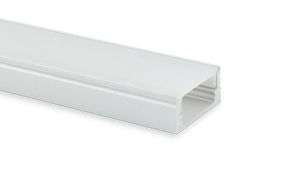
The core of any LED lighting system integrated into gypsum board is the aluminum profile. Ledpoint offers a comprehensive range of solutions, each tailored to specific design needs. Below, we’ll examine each type in detail, starting with models available in our online catalog.
Recessed gypsum board profiles: the most widespread and versatile solution
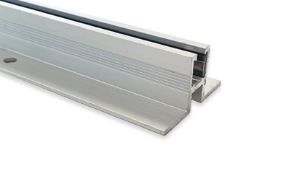
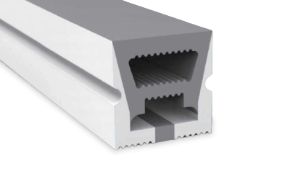
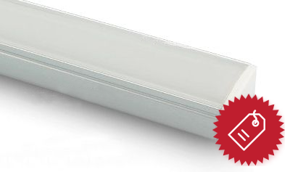
Recessed gypsum board profiles represent the most common choice for professional installations. Designed to be fully embedded within the gypsum board structure—with only the diffuser lens visible—their main advantage lies in their minimalist, seamless aesthetic, creating the illusion that light emanates directly from the architecture itself. On our website, under the dedicated section for aluminum profiles for gypsum board, you’ll find several variants of this type, primarily differentiated by:
1. Profiles with opal diffusers: homogeneous light and optimal visual comfort
Profiles equipped with opal PMMA diffusers are ideal for applications requiring soft, glare-free illumination. This solution completely eliminates the “dot effect” of LED strips, transforming individual light points into a continuous, uniform line. The opal diffuser distributes light evenly across its entire surface, minimizing luminous losses (typically around 10–15%). This type is especially suited for residential spaces, hotels, offices, and any environment where visual comfort is paramount. The thickness and quality of the PMMA are critical: low-quality materials may yellow over time or reduce light transmission efficiency.
2. Profiles with transparent lenses: maximum efficiency and optical precision
For applications demanding maximum luminous efficiency or precise beam control, profiles with transparent PC (polycarbonate) lenses are the ideal choice. This solution preserves over 95% of the LED strip’s emitted luminous flux, allowing required illuminance levels to be achieved with lower installed power. Transparent lenses are often paired with micro-prisms or specialized textures that control the emission angle, enabling narrow beams (as tight as 15°) for accent lighting or wide beams (up to 120°) for general illumination. Choosing this option requires careful consideration of glare control, as LEDs remain partially visible through the lens.
Surface-mounted or suspended profiles: retrofitting existing ceilings
When structural modifications to an existing ceiling aren’t feasible, surface-mounted or suspended LED profiles offer a practical alternative. These profiles are designed to be applied directly onto ceiling or wall surfaces, delivering linear lighting effects without complex construction work. Ledpoint provides several solutions in this category, characterized by:
Thin, minimalist design
The latest models feature compact heights (often under 15mm), ensuring discretion even when visibly mounted. Surface finishes—available in various RAL colors—allow the profile to either blend seamlessly into its surroundings or create intentional chromatic contrast as a design element.
Universal mounting system
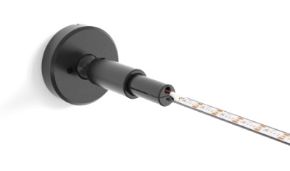
Thanks to adaptable fastening systems, these profiles can be installed on gypsum board, concrete, wood, or metal surfaces, offering maximum application flexibility. Some models also include magnetic systems for even faster installation and maintenance.
Accessory integration
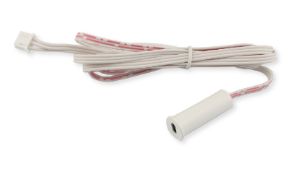
Many surface-mounted profiles are designed to integrate not only LED strips but also motion sensors, conference microphones, or acoustic diffusers, transforming them into multifunctional elements for smart spaces.
Angular and curved profiles: innovative design solutions
Contemporary interior architecture increasingly favors soft lines, rounded corners, and fluid transitions between surfaces. To meet these demands, angular and curved LED profiles for gypsum board provide advanced technical solutions that enable installations impossible with standard profiles.
Profiles for internal and external corners
Specialized corner profiles (typically 90°, but available in other angles) ensure luminous continuity along room perimeters, enhancing spatial volume. The main technical challenge here is maintaining effective thermal dissipation in confined spaces while preserving aesthetic perfection on both visible faces.
Flexible profiles for curves and organic shapes
Made from specially treated aluminum or custom alloys, these profiles can be manually or mechanically bent to follow non-linear paths. Integrating lighting into curved forms unlocks new design possibilities—from spirals on staircases to wave-like partitions and full circles on ceilings. Selecting the right LED strip for these profiles is crucial: it must be flexible enough to follow tight curves without damage and maintain sufficient LED density to ensure a continuous light line even in sharp bends.
Advantages and disadvantages of gypsum board coves
Before deciding to implement a gypsum board cove lighting system, it’s vital to fully understand both its strengths and limitations. This honest assessment will help you make informed decisions and select the best solution for your specific project.
Why choose LED gypsum board coves
Several compelling reasons justify choosing this solution—even if it isn’t the fastest or cheapest option. Let’s explore them.
1. Superior light quality and unmatched uniformity
The most evident benefit of a well-designed cove system is the quality of diffused light it produces. Unlike LED strips applied directly to a surface—which inevitably create a “dotted” effect—profiles with diffusers transform the source into a continuous, uniform line. This outcome is particularly valued in spaces requiring ambient lighting or functional illumination that remains unobtrusive. Ledpoint’s gypsum board profiles are engineered with optics optimized to maximize uniformity, regardless of the chosen LED strip density.
2. Optimal thermal dissipation and extended LED lifespan
The aluminum profile doesn’t just contain the LED strip—it acts as a passive heat sink. Like all electronic components, LEDs generate heat during operation. Excessive overheating drastically shortens LED chip lifespan (a general rule states that every 10°C reduction in junction temperature doubles lifespan). High-quality aluminum profiles transfer heat from the LEDs to the gypsum structure and surrounding air, keeping operating temperatures within optimal ranges. This translates into longer system life (up to 50,000 hours or more) and stable color characteristics over time.
3. Complete architectural integration and customizable design
LED gypsum board coves allow full integration of the light source into the architecture, eliminating any visual distractions. This “invisible source” approach is especially prized in minimalist and contemporary styles. Simultaneously, the ability to choose from various diffuser types, profile finishes, and color temperatures enables complete customization to match any interior aesthetic.
4. Easy installation and accessible maintenance
Contrary to common belief, well-designed cove systems are easier to install than seemingly simpler alternatives. Profiles provide precise alignment guides for LED strip placement, eliminating crooked or misaligned applications. Moreover, many Ledpoint profiles feature easy-access mechanisms that allow LED strip replacement or servicing without dismantling the entire structure—greatly simplifying maintenance.
Disadvantages: when gypsum board coves aren’t the best choice
Certain factors may discourage adoption. Before purchasing gypsum board coves, carefully assess the installation environment and user needs.
1. Higher initial cost compared to basic solutions
The primary barrier to widespread adoption of professional cove systems is undoubtedly the higher upfront cost. Compared to direct LED strip application, installing an aluminum profile within gypsum board involves additional expenses for the profile itself, diffuser, mounting accessories, and skilled labor. However, this investment should be viewed long-term: extended LED life, reduced maintenance, and superior light quality often justify the initial premium—especially in mid-to-high-end projects.
2. Required space and dimensional constraints
Integrating an aluminum profile into a gypsum structure requires dedicated minimum clearance that isn’t always available. In very low dropped ceilings (under 10–15 cm), installing a cove with a profile may prove difficult or impossible. In such cases, consider alternative solutions like ultra-low-profile systems (some models are under 10mm total height) or reevaluate your lighting strategy entirely. Early planning is essential to address these spatial limitations.
3. Greater design and installation complexity
Properly designing and installing a gypsum board cove system requires specialized skills beyond standard electrical work. Key considerations include: correct electrical supply (wire gauge calculations, driver placement, voltage drop management), thermal management (natural or forced ventilation if needed), maintenance accessibility, and integration with automation systems. Lacking these competencies can lead to disappointing results—or safety hazards. That’s why Ledpoint provides not just products but also specialized technical support for designers and installers.
Current and future trends: insights from SICAM 2025
As active participants at SICAM 2025—the International Trade Fair for Components, Accessories, and Semi-finished Products for the Furniture Industry held in Pordenone—we observed firsthand the trends shaping the future of integrated lighting. These innovations are already influencing our product development and client recommendations.
Extreme minimalism and “invisible” profiles
The dominant trend at SICAM 2025 was undoubtedly extreme minimalism in integrated lighting. Leading innovators showcased profiles under 8mm in total height and minimally wide—just enough to house high-density LED strips. The goal is to render the profile virtually invisible when unlit, creating the magical effect of light emerging from nothingness. Achieving this requires special aluminum alloys with reduced thickness yet maintained mechanical strength, plus diffusers with luminous transmission exceeding 92%.
Smart and wireless technology integration
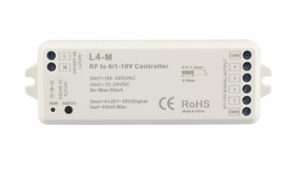
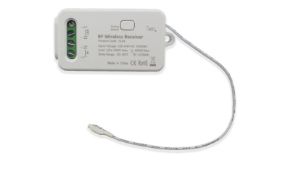
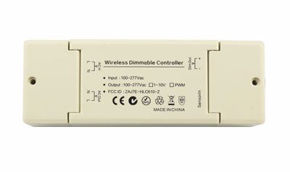
Smart LED gypsum board coves represent another rapidly growing trend. SICAM exhibits increasingly featured profiles with integrated: wireless control circuits (Zigbee, Bluetooth Mesh, Wi-Fi), occupancy and ambient light sensors, and even built-in microphones for voice commands. This integration eliminates control wiring, greatly simplifying installation and enabling advanced lighting control without traditional switches.
Sustainability and recycled materials
Sustainability has become a decisive factor for designers and end users alike. At SICAM 2025, we noted strong interest in profiles made from recycled aluminum (up to 95% in some cases) and diffusers from biodegradable or recyclable materials. Beyond reduced environmental impact, these materials often offer enhanced technical properties—such as improved corrosion resistance or better long-term color stability.
Advanced aesthetic customization
Standardization is giving way to personalization. Trends show growing demand for: profiles with special finishes, diffusers featuring integrated patterns or graphics (to create light-and-shadow effects), and modular systems enabling multiple profile types within a single installation. Advanced manufacturing technologies—like 3D printing for custom components, laser cutting for precision details, and innovative surface treatments—make this customization possible while ensuring finish durability.
Optimization for next-generation LED technologies
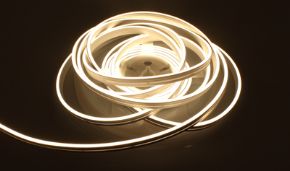
As LED technology evolves, so must profiles. Key innovations observed include: optimization for COB (Chip On Board) LED strips—which deliver extreme density and zero dot effect—enhanced passive cooling systems for higher-power next-gen strips, and compatibility with higher voltages (48V and above) to power longer runs with minimal voltage drop. Our profiles are already engineered for these advanced technologies, ensuring optimal performance even with the most innovative LED products.
Practical installation guide for gypsum board coves
Correct installation is crucial to maximizing the potential of a gypsum board cove lighting system. This section provides a detailed guide based on industry best practices and years of real-world project experience with our products.
Phase 1: Planning and preliminary design
Before any physical work begins, clearly define your photometric goals: What activities will occur in the space? What atmospheres do you want to create? What illuminance levels are required? These answers will guide your selection of color temperature (typically 2700K–3000K for warm, inviting environments; 4000K for workspaces), color rendering index (CRI >90 where accurate color perception matters), and LED strip power.
Fixture and power calculation
To determine required LED strip length, profile quantity, and power, precise calculations are essential. Starting from desired lux levels on the task surface (e.g., 300 lux for kitchen countertops, 150 lux for living rooms), calculate total required luminous flux (in lumens), accounting for installation height, beam angle, and surface reflectance. From this, derive total power and LED strip length—always including a 10–20% safety margin to compensate for diffuser losses and LED aging.
Phase 2: Gypsum board structure preparation
The gypsum structure must be designed from the outset to accommodate the aluminum profile. This means allocating sufficient space for profile housing (typically 2–3cm wider than the profile for adjustments), providing solid mounting support (preferably wooden battens or dedicated metal studs), and routing power cables in compliance with electrical safety codes. Perfect profile alignment and leveling are critical—any misalignment becomes glaringly obvious once illuminated.
Mounting method selection
Ledpoint profiles can be installed in various configurations depending on the structure: fully recessed (profile completely hidden, only diffuser visible), ceiling-mounted (profile fixed to ceiling underside for a floating light effect), or wall-mounted (profile installed vertically or horizontally on walls). Each method requires specific accessories (mounting clips, corner brackets, connectors) that must be planned during design.
Phase 3: Profile and LED strip installation
Aluminum profiles can be easily cut with a fine-tooth saw or metal cutter. Clean, perpendicular cuts are essential for perfect alignment between sections and flawless final aesthetics. After cutting, deburr all edges to prevent LED strip damage or connector issues.
LED strip application
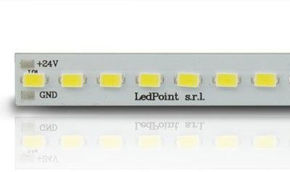
Apply the LED strip inside the profile following key guidelines: progressively peel the adhesive backing while applying gentle pressure for optimal contact with the profile base; observe polarity markings (+/-) when connecting multiple strip sections; avoid tight bends that could damage circuitry (minimum bend radius is typically specified by the manufacturer). For runs over 5 meters, include intermediate power feeds to prevent voltage drop-induced dimming at the far end.
Phase 4: Wiring and electrical connection
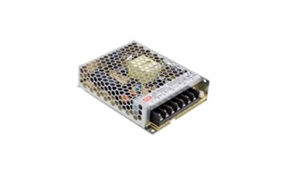
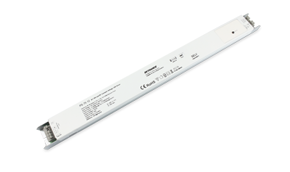
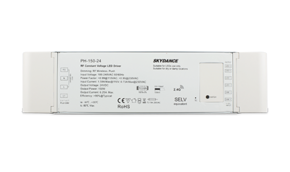
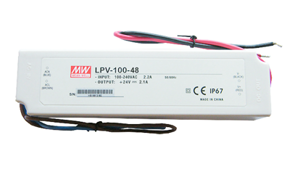
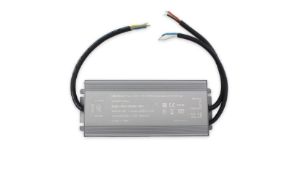
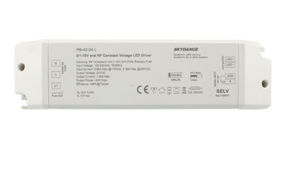
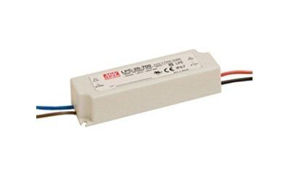
The driver is the most critical component in any LED installation. It must be properly sized (typically 20–30% above total installed load), placed in a ventilated, accessible location for maintenance, and protected against surges. For large installations, multiple moderate-power drivers are preferable to a single high-power unit—strategically distributed to minimize cable runs to LED strips.
Wiring and protection
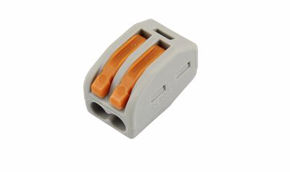
Interconnecting cables between drivers and LED strips must have adequate cross-section for the carried current (generally ≥0.75mm² for ≤4A, ≥1.5mm² for higher currents). All connections should use proper connectors (never electrical tape) and be sealed with heat-shrink tubing. Install a dedicated circuit breaker for LED lighting and, where required by code, a residual-current device (RCD).
Phase 5: Commissioning and scheduled maintenance
Before permanently closing the gypsum structure, conduct thorough testing: verify uniform illumination across all sections, check for bright/dim spots (indicating power issues), confirm consistent color temperature, and validate all controls (dimmers, sensors, smart systems). This is also the ideal moment to fine-tune profile orientation or LED strip positioning for optimal light distribution.
Maintenance plan
Even the most reliable LED systems benefit from scheduled maintenance. An effective plan includes: semi-annual visual inspection for dust/debris inside profiles, diffuser cleaning with appropriate (non-aggressive) products, operating temperature checks (using an infrared thermometer), and periodic driver testing. Ledpoint offers scheduled maintenance services covering these checks and preventive replacement of wear-prone components.
Gypsum board coves for every need: from residential to contract
Ledpoint’s gypsum board profile range is engineered to meet every possible application—from small residential upgrades to large-scale contract projects. This section explores how to select the optimal solution for different project types, referencing specific products from our catalog.
Residential solutions: homes and apartments
For residential applications—where aesthetics and visual comfort are paramount—we recommend our recessed profiles with opal diffusers. Available in widths from 10mm to 50mm, these profiles deliver maximum light uniformity and blend seamlessly into domestic environments. For bedrooms and living rooms, we suggest warm color temperatures (2700K–3000K) and LED strips with CRI >90 for natural color rendering. For kitchens and bathrooms—requiring higher illuminance—neutral temperatures (3500K–4000K) and high-efficiency strips (>120 lm/W) are ideal.
Office and commercial solutions: productivity and well-being
In workplaces, lighting must balance energy efficiency, visual comfort, and occupant well-being. For these projects, our Human Centric Lighting (HCL) profiles are the perfect choice. These systems automatically adjust color temperature and intensity throughout the day, mimicking natural daylight to support circadian rhythms. Paired with occupancy and ambient light sensors, they also deliver significant energy savings (up to 60% versus traditional systems).
Hotel and hospitality solutions: atmosphere and guest experience
In hospitality, lighting critically shapes guest experience. For lobbies and common areas, we recommend dramatic solutions using curved profiles and combinations of direct/indirect lighting. For guest rooms, discreet yet functional systems with intuitive controls allow guests to easily customize lighting. Our profiles are especially valued in this sector for their added aesthetic value.
Retail and exhibition solutions: merchandise enhancement
In commercial lighting, the primary goal is product enhancement. For this sector, we offer profiles with specialized optics for showcases, displays, and sales floors. These profiles minimize reflections on glass surfaces, ensure excellent color rendering (CRI >95), and create attention-grabbing light effects without causing customer glare. Dimmable and tunable-color systems further allow adaptation to different merchandise types or special events.
Gypsum board coves: the future of integrated LED lighting is here
LED gypsum board coves have long surpassed fleeting trend status to become a mature, established solution in architectural lighting. As demonstrated throughout this article, combining thoughtful design, high-quality products like those from Ledpoint, and professional installation enables lighting systems that harmonize aesthetics, functionality, and energy efficiency.
Trends from SICAM 2025 clearly indicate the future direction: toward deeper integration, heightened personalization, and convergence between lighting, automation, and occupant well-being. Profiles will become increasingly discreet (sometimes truly invisible) yet smarter and more multifunctional—embedding sensors, advanced controls, and communication technologies.
For designers, architects, and installers, this means deep expertise in LED cove systems is no longer optional—it’s essential. The ability to select the right profile for each application, correctly size installations, and integrate lighting with other building technologies will be increasingly decisive for project success.
Ledpoint stands alongside professionals on this journey—not only offering high-quality products but also providing the technical support, training, and assistance needed to tackle even the most complex design challenges. Our gypsum board profile catalog continuously evolves to incorporate the latest technological innovations and respond to emerging market needs.
If you’re considering integrating a cove lighting system into your next project, don’t hesitate to contact our expert team. We’d be delighted to help you find the optimal solution—from concept to completion—ensuring results that exceed your expectations and those of your clients.