








Thermal management in LED lighting fixtures: impact on useful life and performance
Thermal management is the critical factor that determines the long-term success or failure of an LED lighting system. This article thoroughly explores thermal management strategies, analyzing how proper thermal energy dissipation directly impacts operational lifespan, luminous efficiency, and color stability of LED strips.
Through technical data, comparative tables, and practical guidelines, we provide a comprehensive resource for lighting designers, installers, and enthusiasts.
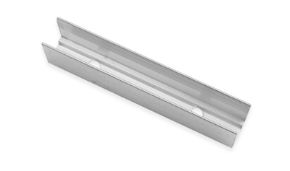
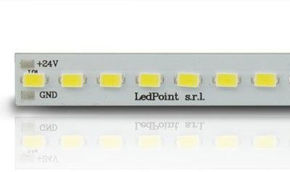
In the world of solid-state lighting, thermal management is the foundational discipline responsible for controlling and dissipating heat generated by light-emitting diodes. Contrary to common perception, LEDs produce a significant amount of thermal energy that, if not properly managed, irreversibly compromises system performance. Effective LED thermal management is therefore not optional—it is an essential engineering requirement to ensure durable and efficient investments. Thermal management encompasses the set of techniques, methodologies, and components designed to control, redistribute, and dissipate heat generated by electronic or electromechanical devices. Specifically in LED lighting, this discipline focuses on optimizing heat transfer from semiconductor junctions to the surrounding environment, keeping operating temperatures within manufacturer-specified safe ranges. An effective thermal energy dissipation system acts like the product’s immune system, preventing premature degradation and preserving original technical specifications. Light-emitting diodes convert electrical energy into light with an efficiency typically ranging between 30% and 50% in high-quality commercial products. The remaining 50% to 70% of input energy is converted into thermal energy that must be expelled from the system. This heat is primarily generated at the PN junction of the semiconductor, where electron-hole recombination occurs. The concentration of heat in an extremely small area (often less than one square millimeter) creates very high thermal gradients that demand sophisticated design solutions. In electronics, thermal management represents a sub-discipline of applied thermal engineering specifically focused on circuits and electronic components. It studies heat transfer mechanisms—conduction, convection, and radiation—as applied to miniaturized systems where power densities can reach extreme values. PCB thermal management (printed circuit board thermal management) is a specialization that considers not only discrete components like LEDs but the entire assembly, including copper traces, dielectric substrates, and potential thermal interface materials. An integrated PCB thermal management approach simultaneously considers: To fully understand the engineering challenge of thermal management in LEDs, one must focus on the microscopic region where heat is generated: the semiconductor junction. This tiny yet critical point is the epicenter of all considerations regarding heat dissipation and component longevity. While ambient or heatsink temperatures are measurable and often monitored, junction temperature (Tj) is the fundamental state variable—the true thermometer of LED health. Controlling it is a practical necessity that determines material degradation rates, the magnitude of chromatic shift, and the risk of catastrophic phenomena like thermal runaway. In this section, we will deeply analyze what this parameter truly is, how it relates to input electrical power and the effectiveness of the thermal energy dissipation system, and what threshold values distinguish safe operation from accelerated degradation—based on established physical models and industry experimental data. Junction temperature (Tj) is the fundamental parameter in LED thermal management, representing the actual temperature of the semiconductor at the point where light emission occurs. Expressed in degrees Celsius (°C), this value cannot be directly measured non-invasively but must be calculated or estimated using thermal models that account for thermal resistance between the junction and the measurement point. Junction temperature directly influences: The maximum junction temperature (Tjmax) is specified by LED manufacturers in technical datasheets and represents the absolute limit beyond which the component suffers irreversible damage within a very short time. For most high-quality illumination LEDs, this value typically ranges between 125°C and 150°C, with some specialized products reaching up to 180°C. However, best practices in lighting engineering recommend operating significantly below this limit—ideally keeping junction temperature under 85°C to ensure extended useful life. According to accelerated degradation curves published by organizations like the Illuminating Engineering Society (IES), every 10°C reduction in junction temperature approximately doubles the expected LED lifetime. In advanced lighting design, energy management and thermal management emerge not as separate domains but as two inseparable sides of the same engineering coin. This section explores the deep synergy linking optimized energy flow management with the ability to control and dissipate generated heat. Understanding this interconnection is essential: every watt saved through efficient energy management translates practically into one less watt of thermal energy that the dissipation system must handle. Conversely, superior thermal management keeps junction temperature low, preserving the semiconductor’s quantum efficiency and thereby reducing the percentage of energy converted into heat. We will analyze how an integrated approach—simultaneously considering power supply, driver efficiency, circuit topology, and thermal conduction pathways—is the only way to achieve LED systems that maximize luminous efficacy (lm/W), reliability, and service life, transforming a thermal constraint into a systemic optimization opportunity. Energy management in LED systems involves the holistic optimization of energy flow from power source to visible light conversion. This approach considers not only the electro-optical efficiency of the diode but also losses in drivers, wiring, and control systems. A key aspect of energy management is recognizing that thermal energy represents the primary form of "wasted" energy in the conversion process. Therefore, effective energy management cannot exist without equally effective thermal management, creating a synergy where every watt saved in generated heat is one less watt to dissipate. Among the most dangerous consequences of inadequate thermal management in LED systems, thermal runaway represents a critical instability scenario that can lead to complete component failure within seconds. Unlike gradual degradation processes, thermal runaway is a sudden, self-sustaining event—a thermal chain reaction where rising temperature causes increased power dissipation, which in turn generates further exponential temperature rise. If not interrupted by protection mechanisms or an oversized dissipation system, this vicious cycle inevitably leads to physical destruction of the junction. In this chapter, we will examine in detail the physical and design conditions that predispose systems to thermal runaway, the microscopic semiconductor mechanisms that trigger it (such as the exponential increase in leakage current with temperature), and the essential prevention strategies that must be integrated at the PCB thermal management, material selection, and electronic design levels. Understanding and designing against this phenomenon is not merely a best practice—it is a safety and reliability imperative for any professional application. In LEDs, thermal runaway is particularly insidious because junction thermal resistance tends to decrease as temperature rises, while semiconductor leakage current increases exponentially. A properly designed thermal management system must absolutely prevent this condition through: In thermal management, thermal resistance becomes the cornerstone parameter—the pivot through which dissipation requirements translate into concrete, verifiable design specifications. Every interface, every material, every centimeter of aluminum profile contributes its own "share" of thermal resistance to the total path, ultimately determining the temperature difference between the glowing junction and ambient air. Mastery of calculating and interpreting this parameter means shifting from empirical to scientific approaches in dissipation system design. It is therefore essential to break down the concept of thermal resistance into its constituent elements, define its unit of measurement and physical implications, and apply it practically through analysis of the typical thermal path of an LED strip mounted on a profile—using tools that enable accurate junction temperature estimates during the design phase and objective, data-driven selection of dissipation components rather than assumptions. Thermal resistance (denoted Rth or θ) measures opposition to heat flow through a material or structure, analogous to how electrical resistance opposes current flow. Its SI unit is kelvin per watt (K/W) or, equivalently, degrees Celsius per watt (°C/W). This parameter quantifies the temperature rise per watt of dissipated power. In LED systems, several thermal resistances in series are typically considered: The sum of these thermal resistances determines junction temperature for a given dissipated power: Tj = Ta + (Rth_total × P_dissipated), where Ta is ambient temperature. LED strips present particularly complex thermal dissipation challenges due to their elongated, thin geometry, which limits available surface area for heat transfer. Moreover, the flexibility required in many applications rules out rigid, high-thermal-conductivity materials. LED strip heat dissipation must therefore balance thermal efficiency, mechanical flexibility, and cost, requiring innovative design solutions. Primary heat dissipation mechanisms in strips include: Extruded aluminum profiles represent the most effective solution for LED strip heat dissipation in professional applications. These components simultaneously fulfill three critical functions: mechanical protection, uniform light distribution, and above all, optimized thermal energy dissipation. The physical principle behind their effectiveness lies in aluminum’s high thermal conductivity (approximately 200–240 W/mK for commonly used alloys) and large external surface area, which maximizes convective and radiative heat exchange. Profile selection depends on: The heat dissipation capacity of an LED profile primarily depends on its cross-sectional dimensions, which determine both the conductive cross-section and the external surface area available for environmental heat exchange. Generally, taller and wider profiles offer superior thermal performance—but with trade-offs in size and cost. The table below provides general guidance on dissipation capacity relative to dimensions: The following detailed table provides specific guidance for selecting profiles based on linear power and supply voltage of the LED strip, assuming free-air installation at 25°C ambient temperature: According to research by the U.S. Department of Energy and the International Energy Agency, over 50% of premature failures in LED lighting systems are directly attributable to inadequate thermal management. A comprehensive study published in the Journal of Solid State Lighting indicates that maintaining junction temperature below 85°C instead of 105°C can extend service life from 25,000 to over 70,000 hours—a 180% improvement. In terms of efficiency, every 10°C reduction in junction temperature improves luminous efficacy by 2–5%, depending on the specific LED technology. These figures underscore the economic importance of thermal management—not just as a technical practice, but as a financial strategy that maximizes return on lighting investments. A cost-benefit analysis conducted by the Lighting Research Center shows that investment in advanced dissipation systems (quality aluminum profiles, optimized thermal interfaces, integrated thermal design) typically accounts for only 10–20% of total system cost but can reduce maintenance and replacement costs by 60–80% over the product’s lifetime. Considering that in commercial and industrial applications, labor costs for replacement can exceed the product cost by tenfold, the importance of thermal management becomes evident not only technically but economically. Thermal management is not an ancillary aspect of lighting design—it is the very foundation upon which reliable, efficient, and durable LED systems are built. Proper LED thermal management, through appropriately sized profiles, high-conductivity materials, and thermally optimized design, marks the difference between a product that disappoints and one that exceeds expectations over the long term. In a market increasingly aware of sustainability and total cost of ownership, investing in advanced dissipation solutions is not only a technical choice but a winning business strategy that positions products in the premium segment—where quality and longevity justify and surpass initial costs.Thermal management in LED systems
What is thermal management?
Physical foundations of heating in LEDs
What is thermal management in electronics?
Junction temperatures: where the thermal problem originates
What is junction temperature?
What is the maximum junction temperature?
Energy management and thermal management: two interconnected disciplines
What is energy management?
Thermal runaway: the phenomenon to avoid
When does thermal runaway occur?
Thermal resistance: a fundamental parameter
What is the unit of measurement for thermal resistance?
Heat dissipation in LED strips: challenges and solutions
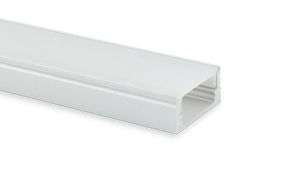
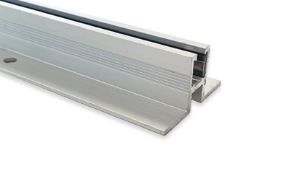
Aluminum LED profiles: the thermal management solution
Profile heat dissipation capacity: size and performance
Profile height (mm) Profile width (mm) Recommended LED strip power (W/m) Typical thermal resistance (°C/W per meter) Typical applications 8–10 8–12 4–7 8–12 Decorative lighting, signage 10–15 12–20 8–14 5–8 Residential ambient lighting, under-cabinet 15–25 20–30 15–24 3–5 Commercial lighting, offices, retail 25–40 30–50 25–40 1.5–3 Industrial lighting, high-bay, grow lights 40+ 50+ 40+ <1.5 Specialized applications, street lighting, projection
Profile selection table by power and voltage
Strip power (W/m) Voltage Min profile height (mm) Min profile width (mm) Estimated Tj without profile (°C) Estimated Tj with profile (°C) Estimated lifetime increase 4.8 12V 8 10 78–85 52–58 3–4x 9.6 24V 10 15 95–105 61–68 5–7x 14.4 24V 15 20 115–125 68–75 8–10x 19.2 24V 20 25 125–140 72–78 10–15x 28.8 48V 25 30 140–160 75–82 20–30x
Industry statistics and data
Economic impact of optimized thermal management
Thermal management as the foundation of LED system quality